The question usually arrives in the second email, right after “love your work.” It’s a little nervous. “What’s your MOQ?” Then, before we can answer: “We’re a small brand, so hopefully that’s okay.”
Here is the short answer. MOQ stands for minimum order quantity: the smallest number of pieces a factory will produce in one order for one style. In clothing manufacturing it is almost always counted per colour, per style, because each colour needs its own dyed fabric. At New Dong Huang (NDH), our MOQ is 500 pieces per colour per style.
That’s the definition. The more useful part is why the number exists, what it actually covers, and how to plan a first order so it doesn’t eat your whole budget.
What does MOQ mean in clothing manufacturing?
In a shop, MOQ is a dollar figure or a case size. In a garment factory it’s tied to the fabric, and that’s the bit people miss.
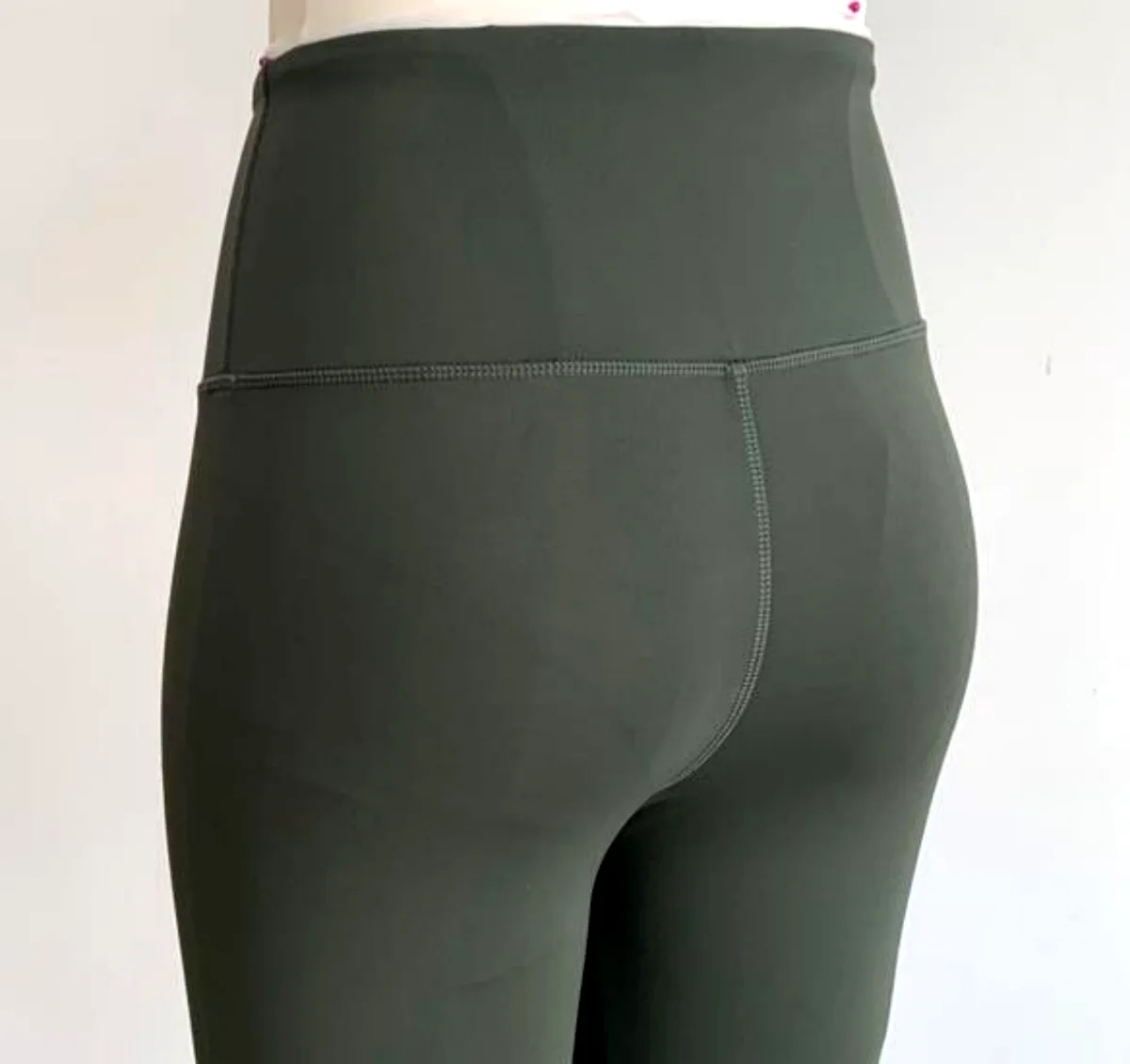
A legging in black and the same legging in navy are, on paper, one style. On the factory floor they are two separate jobs. Each colour starts as its own batch of dyed fabric. Each one gets its own fabric checked, its own lay on the cutting table, its own thread and trims matched to it. So when a factory says “500 per colour per style,” it is really saying: this is the smallest run where one colour of one garment makes sense to dye, cut and sew.
Two styles in two colours each is four runs, not one. Most first-order budgets get rebuilt around that sentence.
Why factories set an MOQ
Honestly, it’s mostly the fabric. Mills dye knit fabric in lots, and a lot has a minimum size. Below that, the mill either won’t run it or charges as if it did. A custom colour makes this stricter, because the mill is mixing dye for you alone.
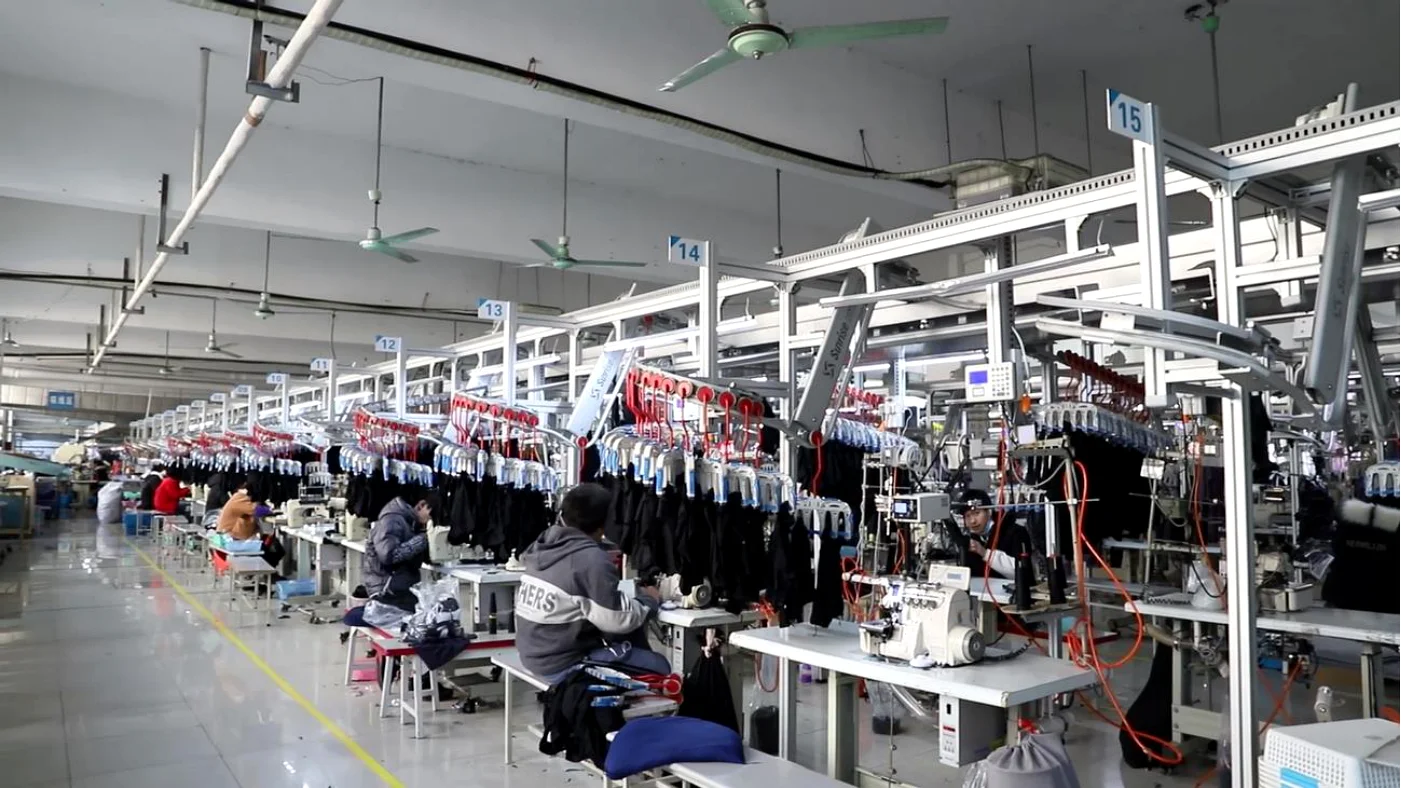
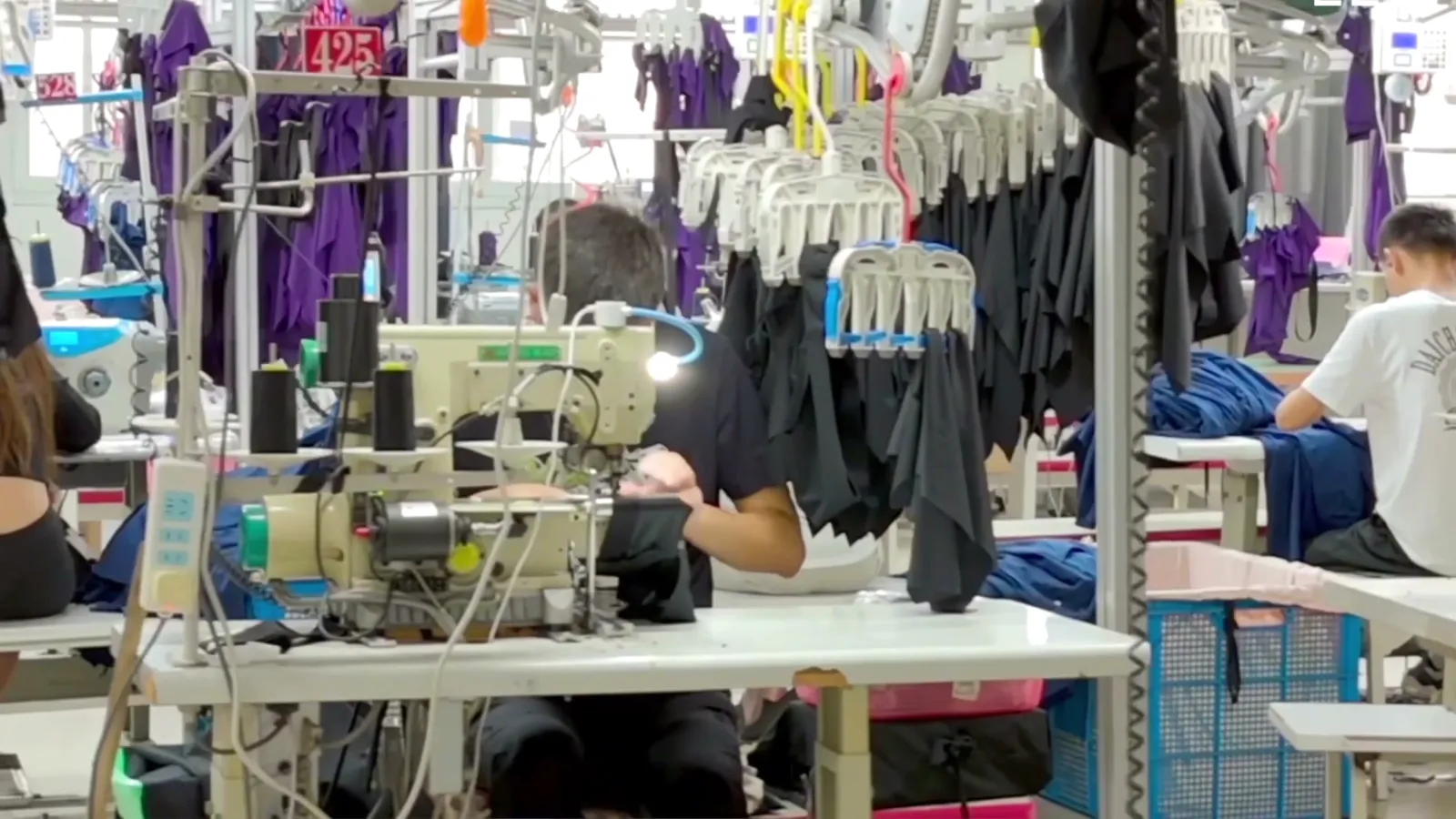
Then there’s setup. Before bulk starts, someone grades the pattern into every size, makes markers, sets up machines for the stitch types, and walks the line through the first pieces. That work takes the same time whether the order is 50 pieces or 5,000. A minimum spreads it across enough garments to keep the price per piece reasonable.
What 500 per colour per style looks like
Take one legging, two colours. That’s 1,000 pieces in your first run. The 500 in each colour is split across your size run, so you decide how many XS, S, M, L and XL go into it based on who buys from you.
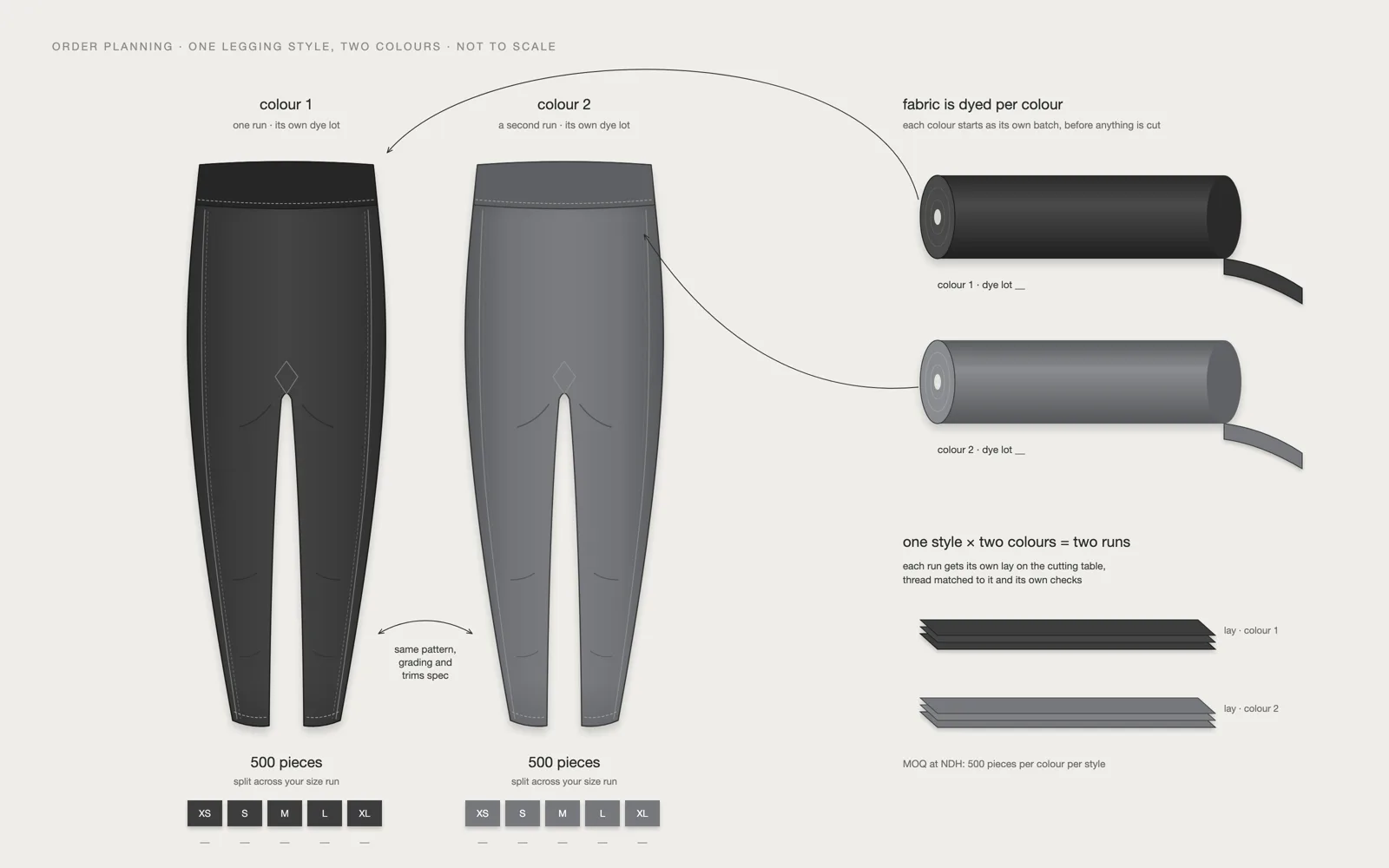
The same rule makes some plans cheaper than they look. A legging and a sports bra cut from the same fabric in the same colour still count as two styles, but they share one fabric order and one lab dip. That’s easier on the mill side than two styles in two unrelated fabrics.
Common MOQ mistakes we see from new brands
Treating colours as free. Six colourways looks great on a launch page. It’s also six runs. If you aren’t sure which colours will sell, start with two and add the third on the reorder, once you have data.
Starting too wide. Many of the DTC brands we work with started with a first run of two or three styles and grew from there. A tight first collection is easier to sell through, and you learn more from it. Ten styles at the minimum each mostly teaches you about storage.
Assuming small runs are a factory problem. Sometimes a small, limited first drop is the brand’s own choice, not something the factory forced on them. Selling out a small run and reordering can be a better story than sitting on stock. Just plan the reorder before you need it.
Skipping the sample stage to save money. Sampling is where fit and fabric get fixed, before you commit to 500 of anything. Our samples take 7–10 days, and it’s the cheapest place to change your mind. Our guide on how to evaluate first samples covers what to check.
Can you negotiate an MOQ?
Sometimes, a little. It depends on what’s driving it. If the fabric is a stock colour the mill already runs, there’s usually more room than with a custom dye. If you’re using one fabric across several styles, the fabric minimum is shared and the conversation gets easier.
What helps most is being clear. Send a tech pack that’s complete, tell the factory how many styles and colours you’re planning over the next year, not just this order, and say which colours are the core ones. A factory can work with a plan. It can’t do much with “we’ll see how it goes.”
What doesn’t help: asking every factory for 50 pieces and picking whoever says yes. A factory that agrees to any number usually makes it up somewhere else, in fabric, in quality checks, or in the reorder that doesn’t match the first run.
How to plan your first order around an MOQ
Work backwards from cash, not from the mood board. Decide what you can spend on the first run, then divide by the minimum per colour. That tells you how many style-and-colour runs you can actually afford. Usually it’s fewer than you hoped, and that’s fine.
Then spend those runs where the demand is clearest. For most activewear brands that means a core legging in black plus one other colour, and maybe a matching bra or short in the same fabric. Keep the trims simple for the first round. Add the interesting stuff once the basics reorder.
And think about the second order on day one. The first run proves people want it. The reorder is where the brand is actually built: same fabric, same colour, same fit as the first time. That’s the part we care about most, and it’s what our page on manufacturing for DTC brands is about.
If you’re planning a first run and want to talk through styles, colours and sizes against a 500-per-colour minimum, send us what you have. A rough line plan is enough to start.