Here’s a line we see in a lot of tech packs: drawcord. That’s it. That’s the spec. One word, and the factory gets to decide the shape, the eyelet, the length and the tip. Which is four decisions you probably wanted to make yourself.
A tech pack is the document a brand sends a factory to explain exactly how a garment is made: the drawings, the measurements for every size, the materials, the stitching, the labels and the colours. Anything it doesn’t say, the factory has to guess. So the easiest way to judge one is simple. Count the guesses.
Our factory has been sewing since 1999, and we’ve read a lot of tech packs. Here’s how we read them, page by page, starting with that drawcord.
A tech pack example: the one-word drawcord
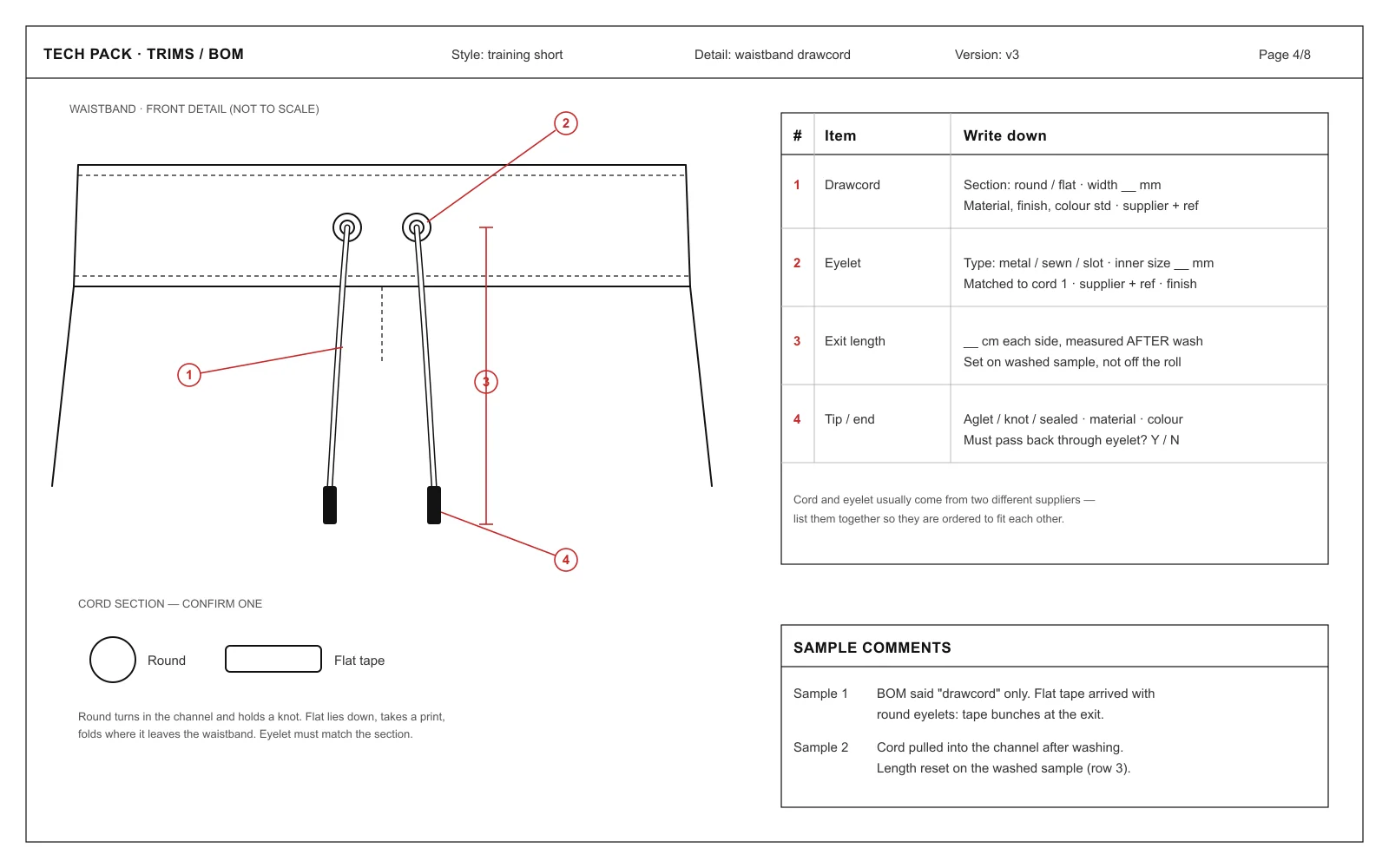
Shape. A round cord and a flat tape are not the same part. A round cord turns in the channel and keeps its shape under a knot. A flat tape lies down, takes a print, and folds where it leaves the waistband.
Eyelet. They don’t want the same eyelet either. Put a round cord in a flat eyelet and it rolls. Pull a flat tape through a round one and it bunches at the exit. The cord and the eyelet usually come from two different suppliers, and nobody puts them on the same page. So list them together in the BOM and say which one fits which.
Length. This is the one nobody writes down. Too long and it swings around. Too short and after a few washes it disappears into the channel, because the cord and the shell don’t shrink at the same rate. We set that length on a washed sample, not straight off the roll. Your tech pack should record the length after washing too.
Tip. The end finish, its material and colour, and whether it has to fit back through the eyelet.
Four lines would have settled all of it. Now multiply that by every trim on the garment. That’s why a tech pack can look complete and the first sample still comes back wrong.
What a tech pack is (and what it isn’t)
It isn’t a mood board. A mood board sets the feeling of a collection. It isn’t a sketch either. A sketch shows what a style looks like. A tech pack tells a factory what to buy, how to cut it, how to sew it and how big each size should be. The test: could two different factories make the same garment from it?
It’s also what every quote is built on. A factory prices what’s written down. If the fabric weight, the trims or the stitching are missing, the quote is a guess. And so is the first sample.
The pages in a clothing tech pack
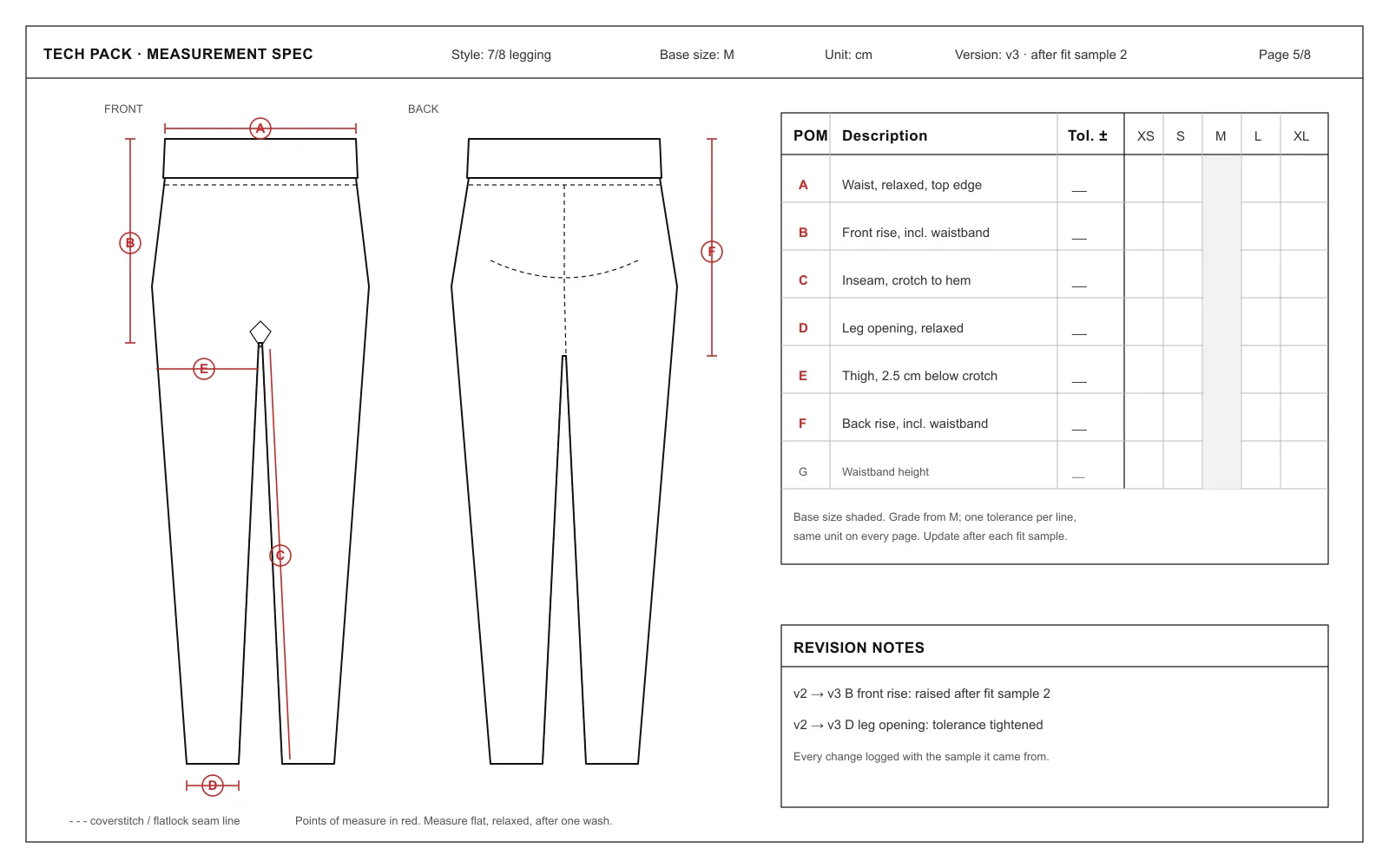
Every brand and every software lays it out a bit differently, but a complete garment tech pack covers eight things.
1. Cover and style summary. Style number, season, product name, main fabric, target price, planned quantities and the version date. One glance should tell the factory what this is and whether it’s the latest file.
2. Flat sketches. Front and back line drawings, plus close-ups of anything small: pockets, waistband, hems, zip ends. Draw every seam and panel line, because the pattern is made from those lines.
3. Construction and stitching. Which seam goes where: overlock, coverstitch, flatlock, bonded or laser-cut edges, bartacks at stress points. In activewear this page matters more than almost anywhere else, because the seams sit on skin. Our guide to flatlock stitch types shows how much the seam choice changes the way a garment wears.
4. Bill of materials (BOM). Every component with supplier, reference, composition, weight, size and colour. Shell fabric, lining, thread, elastic, zips, cords, eyelets, labels, hangtags, bags. Yes, the bags too.
5. Measurement spec and grading. Points of measure with a diagram of where each one is taken, the base size, every size, and the tolerance on each. Pick one unit system and stick to it on every page.
6. Colourways. The colour of every panel and every trim in every colourway, with a standard to match against.
7. Labels, trims and packaging. Where the main label, care label, size label and any heat transfers go, how big they are, the artwork, and how each piece is folded and bagged.
8. Revision log. What changed, when, and after which sample. Skip this page and a factory can sew a perfectly correct garment to an old file. It happens more than anyone likes to admit.
How to make a tech pack a factory can work from
Start from a garment you already like. Measure it flat. Then write down what you want to change, instead of describing everything from zero. It’s the fastest route to a first spec.
Draw the flats, front and back, with every seam. Photos of the reference help, but they don’t replace drawings.
Write construction as instructions, not adjectives. “Clean finish” means something different in every factory. Name the seam, the stitch and the edge finish.
Build the BOM part by part. Use the drawcord as your test: could someone order this trim from your BOM alone, without emailing you?
Get one base size right first, then grade. Add tolerances so both sides know what counts as a pass.
Add colourways and label artwork last, once construction is settled. Otherwise every change gets multiplied across every colour.
And update it after every sample. Fit comments belong in the tech pack, not buried in an email thread from three weeks ago. Date every version.
If you’re putting together a first range, our page for brands starting out covers what to have ready before the first sample.
Tech pack templates: what a good one includes
A template only saves time if it has a place for everything above. Before you use one, check it has room for points of measure with a diagram and a tolerance column, a supplier and reference for every trim (not just the fabric), a seam type for each seam (not one line for the whole garment), label placement drawn on the flat, and a version date on every page plus a revision log.
A template with a sketch box and a size chart will look finished. The factory will still be guessing.
What happens after you send a tech pack to a factory
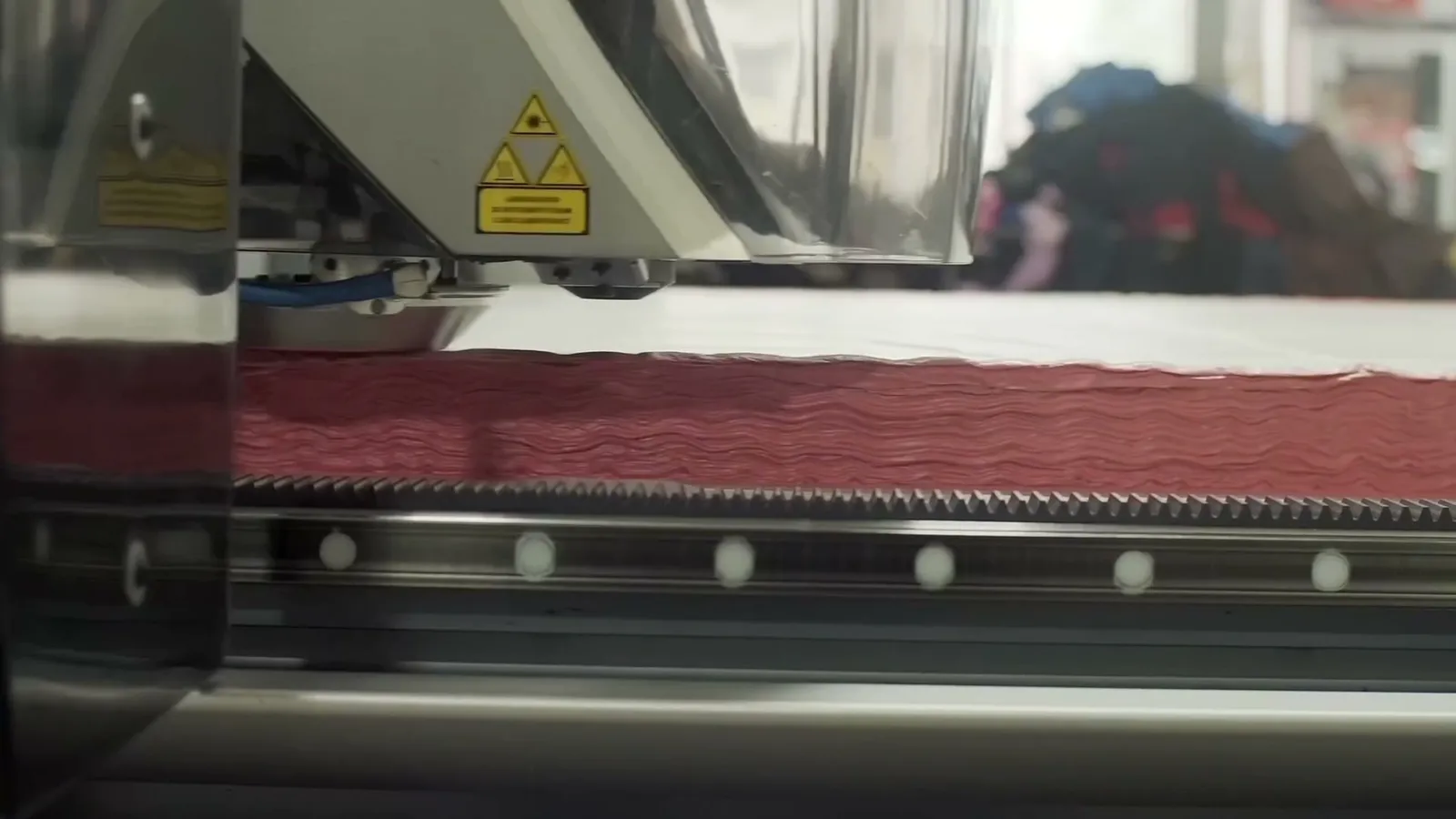
We read it three times. First to quote: the BOM and the construction pages decide the price. Then to make the pattern: the flats and the measurement spec become a pattern, which gets fitted in 3D before any fabric is cut for a physical sample. Then to sew: the construction page tells each operator what goes where.
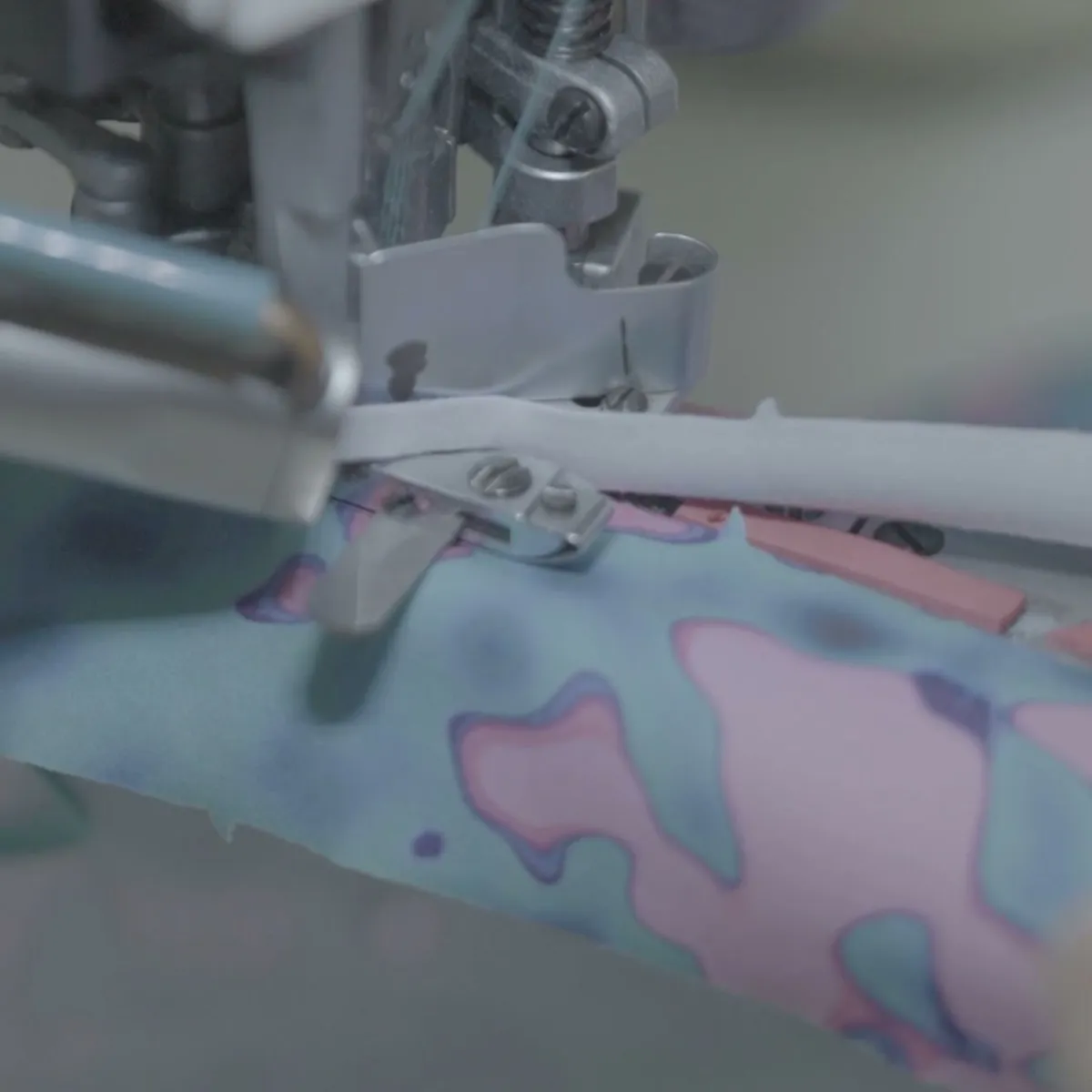
Every sample comes back with comments. The habit that saves the most time is boring: put those comments into the tech pack straight away, so the next sample is made from the corrected file. If you’d rather not build every tech pack from scratch, private label lets you start from an existing style and change the fabric, colour and branding.
Sending us a tech pack
We make leggings, sports bras, shorts, tops and layers for activewear brands. We work from full tech packs, or from a reference garment plus notes. Our minimum is 500 pieces per colour per style. If your tech pack is ready, or half ready, send it over and we’ll tell you what’s missing before we quote.
Originally shared on Instagram: @william.activewear.factory