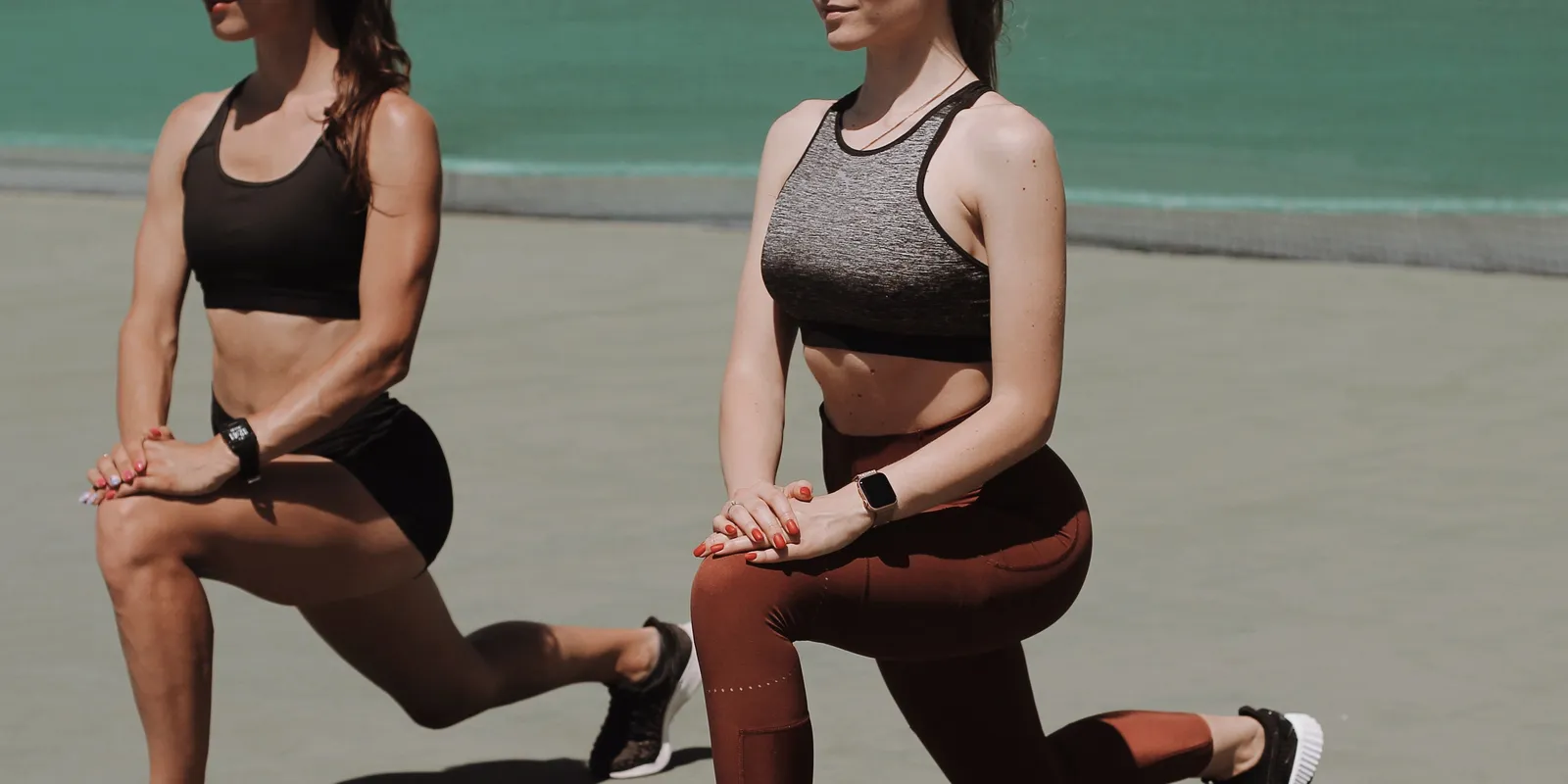
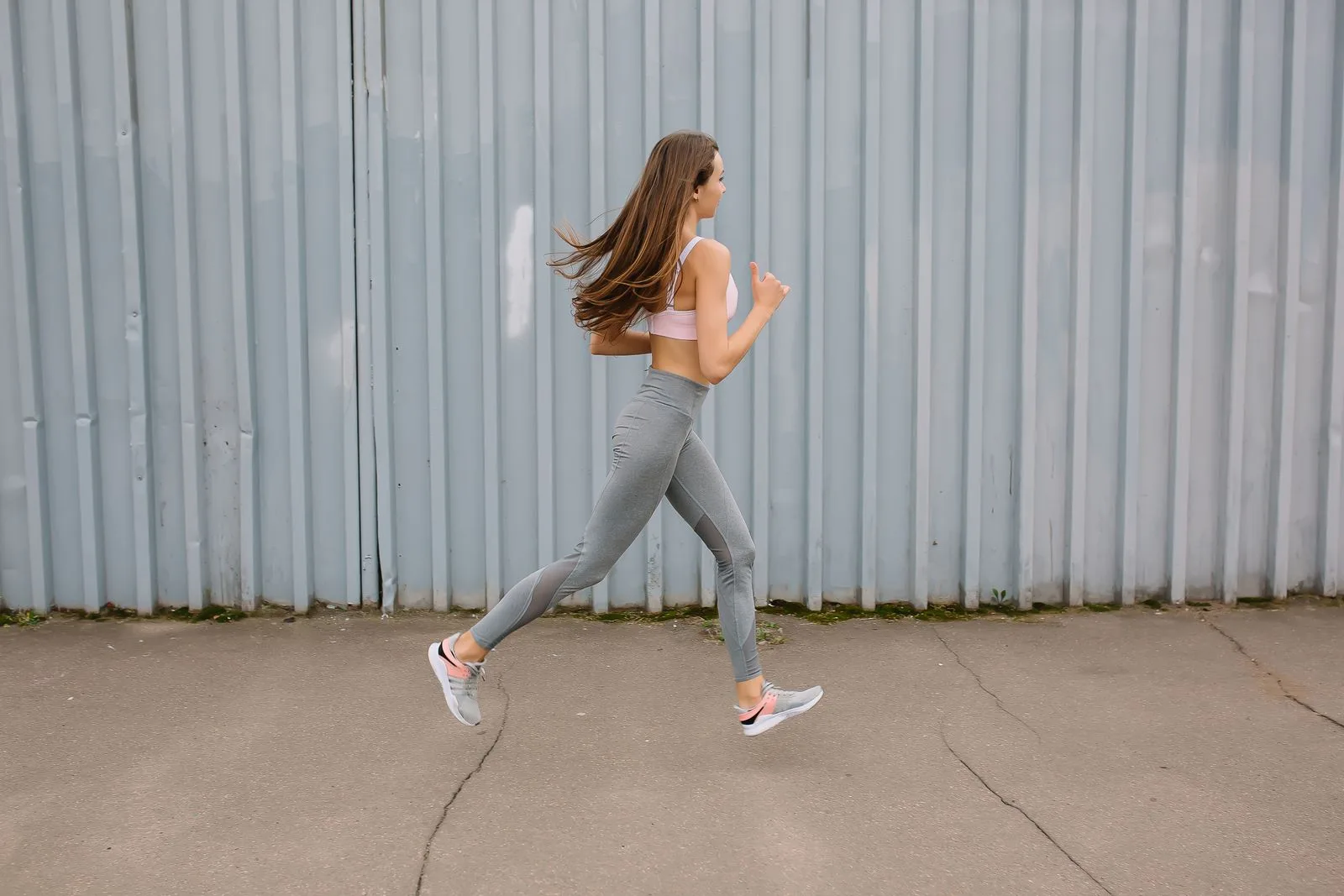
Open a few activewear tech packs and you’ll see the same fibre called three different things. “Lycra” on the fabric page. “Elastane” on the care label. “Spandex” in the email. It’s one fibre. Spandex is a synthetic fibre made from polyurethane that can stretch to several times its own length and snap back. It’s the reason leggings, sports bras and swimwear move with you instead of against you.
Our factory has been sewing since 1999, so here’s how we’d explain it to a brand sitting in our sample room. We’ll skip the chemistry lecture. Mostly.
Spandex vs elastane vs Lycra: one fibre, three names
Spandex is the generic name in the US and Canada. Elastane is the generic name in Europe and most other markets. So “spandex vs elastane” isn’t a choice you have to make. It’s the same thing with a different passport.
Lycra is a brand of spandex. “Lycra vs spandex” is like a branded painkiller vs the generic one on the shelf next to it. Same idea, one of them has a logo.
This matters on one piece of paper: the label. A legging sold in the US will usually say “spandex”. The same legging sold in the UK or EU will say “elastane”, and the nylon in it usually becomes “polyamide”. Customers don’t care. Customs and retailers do.
Brand names only go on your label or hangtag if the fabric actually uses that branded fibre and the brand has signed off on it. If you’re not planning to print the name, you don’t need to ask for it by name. Tell us how much stretch and recovery you need instead. That’s what you’re really asking for.
What is spandex made of?
OK, the short chemistry bit. Spandex is a segmented polyurethane. Its long molecules have soft sections that uncoil when you pull, and hard sections that hold everything together and pull it back when you let go. Stretch, then recovery. That’s the whole trick.
It was developed in the late 1950s to replace rubber thread in things like girdles. Compared with rubber, it’s finer, it takes dye, and it survives sweat and washing a lot better. Which is why you don’t see rubber in your leggings anymore.
Spandex never works alone
You will almost never see a fabric that’s 100% spandex. It’s knitted or woven in with a base fibre, usually nylon or polyester, and it’s the minority of the fabric. Sometimes it goes in as a bare filament next to the main yarn. Sometimes it’s wrapped in nylon or polyester so you only see and feel the outside fibre.
The way we think about it on the factory floor: the base fibre is the face of the fabric. It decides the hand feel, the colour and how it wears. The spandex is the engine underneath. You don’t see it, but you feel it every time you sit down.
That’s why fabrics are named after both fibres:
Nylon spandex fabric is smooth, soft and cool on the skin, with firm compression and good abrasion resistance. It’s the usual pick for premium leggings, sports bras and bodysuits.
Polyester spandex fabric dries faster, holds colour well and can be sublimation printed. You’ll see it in running tops, training shorts, printed leggings and lighter layers. It usually costs less, too.
How much spandex is in activewear fabric?
How much spandex goes in changes everything. A little adds comfort stretch. More of it in a dense knit gives you real compression.
Rather than quote an industry average, here’s what’s actually in our own fabric library. Of the 52 fabrics listed there, 37 have spandex in them, and they split into two fairly clear groups.
The nylon ones mostly sit between 14% and 27% spandex. At one end there’s DHN0242, a 155 GSM knit at 86% nylon and 14% spandex. At the other there’s DH24N049, 340 GSM at 75/25. Those are the fabrics that end up in leggings, sports bras and bodysuits.
The polyester ones mostly sit lower, between 7% and 12%. DHP0127, for example, is 175 GSM at 92/8. That fits how polyester spandex gets used: running tops, shorts and printed pieces that need to move with you but not hold you in. There are exceptions (we have a 270 GSM polyester at 28% spandex), but they’re exceptions.
One honest caveat: the percentage on the label is only part of it. Weight, knit structure and finishing move the result just as much. Two fabrics with the same content can feel like they came from different planets. So use the percentage to narrow the list, then judge the swatch in your hand.
Four way stretch vs two way stretch
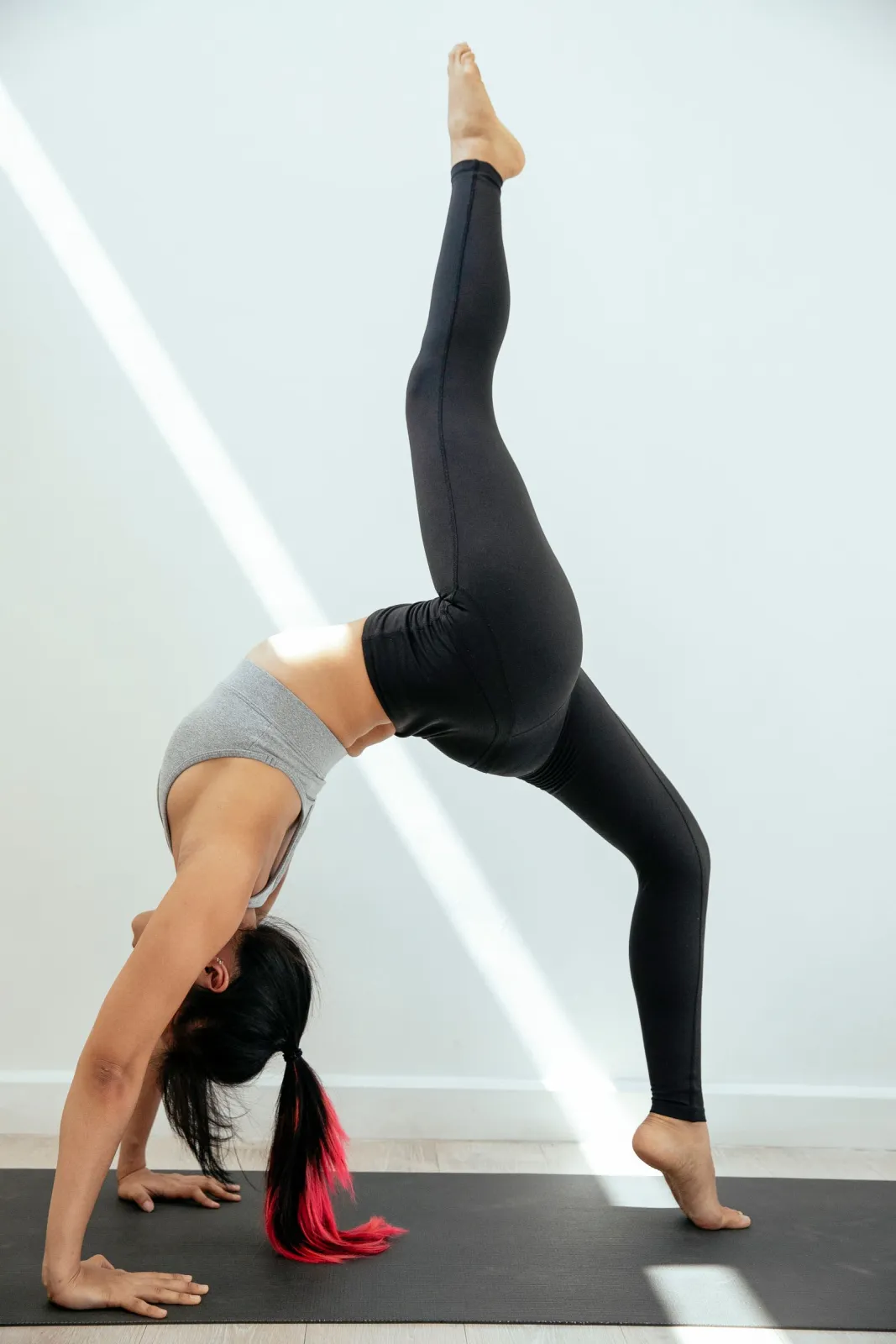
A fabric can stretch across its width, along its length, or both.
Two way stretch goes mostly in one direction. A lot of stretch wovens work this way, with spandex only in the crosswise yarns. It’s common, and usually enough, for shorts, jackets and trousers.
Four way stretch goes both ways. Most knitted activewear with spandex is 4 way stretch, and for leggings and sports bras it’s basically the default. Anything that has to survive a deep squat needs it.
Here’s the catch nobody puts on the swatch card: even in a four way stretch fabric, the two directions are rarely equal. One always gives more. So when the pattern is laid out, the stretchier direction has to run around the body. Get that backwards and the legging feels a size too small, even though every measurement on the spec sheet is right.
What we’d put on the fabric page of your tech pack
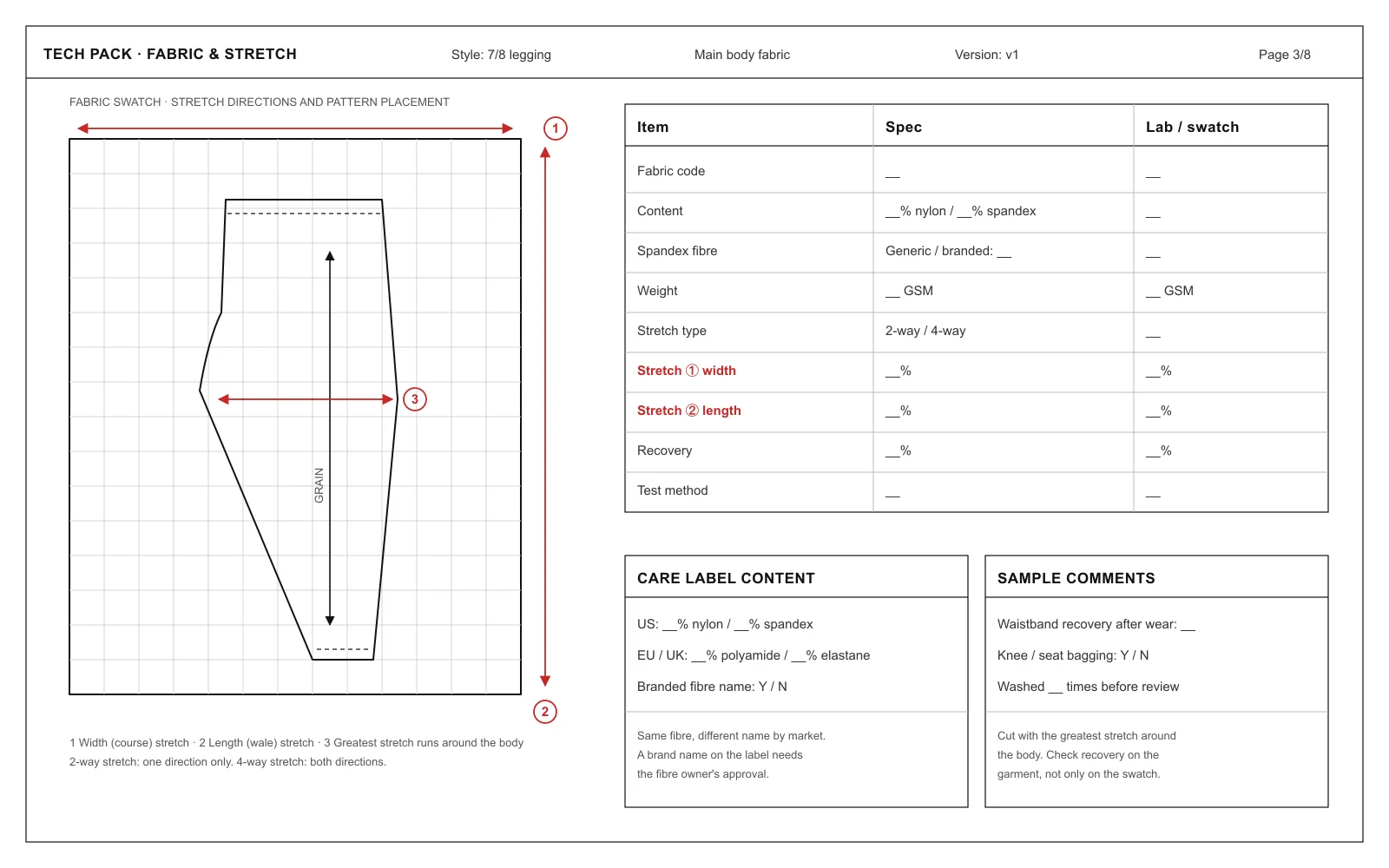
“Stretchy fabric” is not a specification. (If that’s all the tech pack says, the factory is guessing.) If you want the swatch, the sample and the bulk to come out the same, put these on the fabric page:
- Fibre content in percentages, written the way it should appear on the label for each market you sell in.
- Weight in GSM. Same content, different weight, different fabric.
- Two way or four way, and which direction runs around the body.
- Stretch and recovery in both directions, with the test method named, so everyone is measuring the same way.
- A branded fibre, but only if you plan to print its name.
Then check recovery on the actual sample, not just the swatch. Wear it, squat in it, sit in it for a day. If the knees or the seat come back baggy, that tells you more than any fabric sheet. You can browse the weights and constructions we work with in our fabric library.
Why leggings bag at the knee
It’s rarely the size. The knee stretches further than any other part of a legging, every time you sit, squat or take the stairs, and the fabric has to pull itself back every time. When it doesn’t quite make it, you get that little dome.
The lab word for it is growth: stretch the fabric, hold it, let go, and measure how much longer it stays. ASTM D2594 is one of the standard tests for it. Growth comes from the spandex, the base yarn and the knit together, and the base yarn matters more than people expect. Nylon usually springs back better than polyester, which is one more reason most leggings are nylon spandex.
You don’t need a lab to catch it early. Two checks we’d do on any legging sample:
- The knee pull. Pinch the knee of the sample, pull it out, count to five, let go. If it stays domed, change the fabric, not the size.
- The 10 cm mark. Mark 10 cm on the thigh, stretch it, hold it for a minute, let go and measure. Then do it again after ten washes. If the line keeps coming back longer, the recovery isn’t there.
We’ve shown both on Instagram if you’d rather watch than read: the knee pull and what growth actually is.
How spandex fabric gets ruined
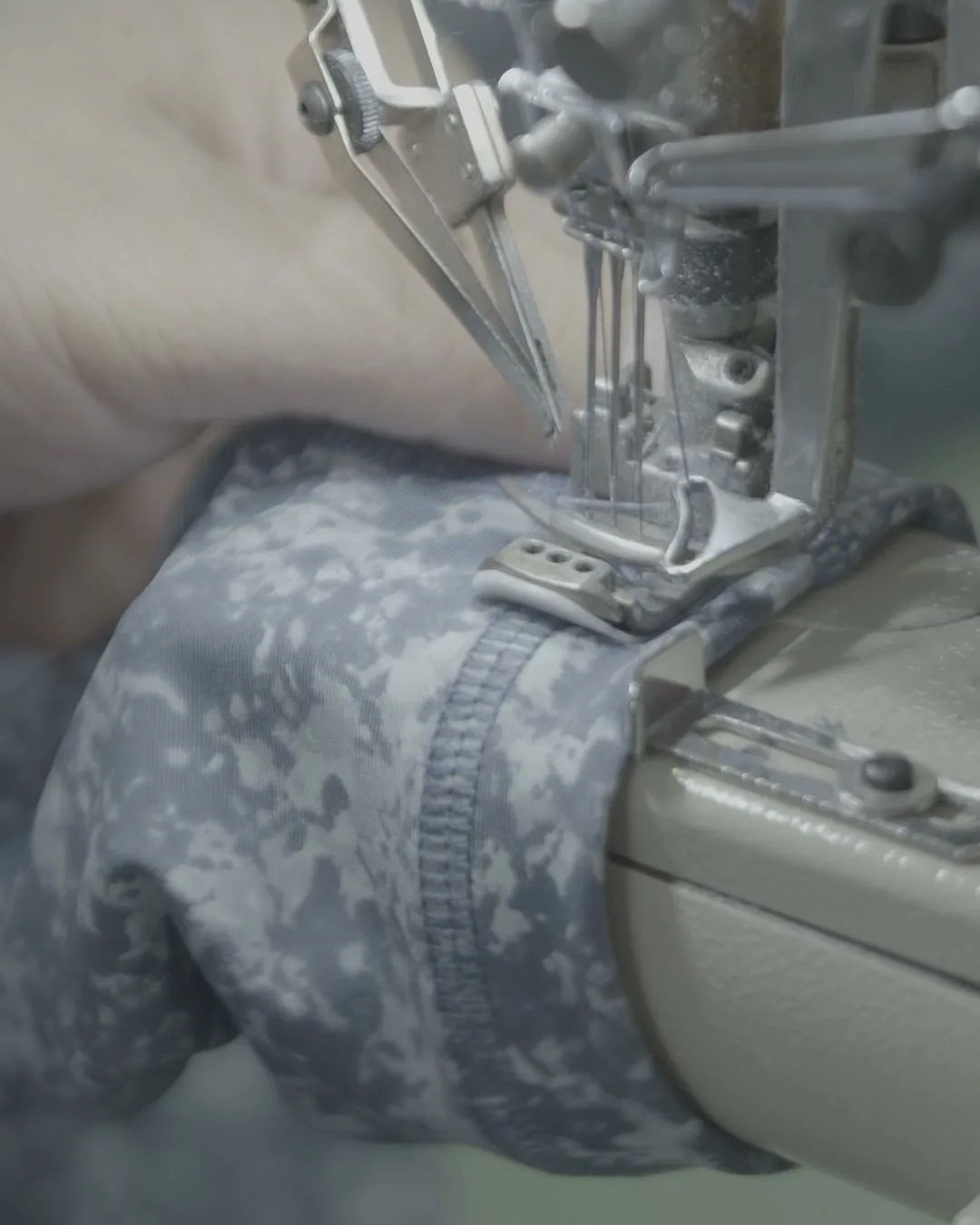
The first way happens before the customer ever wears it: the seams. A stretch fabric needs a seam that stretches with it, so activewear is sewn with overlock, coverstitch and flatlock, with thread and stitch settings that let the seam open up without breaking. A rigid straight stitch on a legging lasts about one squat.
The rest happens after it’s sold, and it’s worth putting in your care instructions:
Heat. Hot dryers and irons damage spandex and kill recovery. Wash cool, line dry or tumble low.
Chlorine. Pool water breaks spandex down over time. That’s why swimwear often uses chlorine-resistant versions of the fibre.
Softener, oils and sunscreen. Fabric softener, body oils and sunscreen coat the fibres and slowly take the edge off stretch and wicking.
Hours at full stretch. The knees and the seat spend the whole day pulled open. That’s where a legging gives up first.
Leggings rarely lose their stretch because the nylon wears out. The spandex goes first. When a customer says a legging “lost its stretch”, it’s usually one of two things. It got cooked in the dryer, or it was made with too little recovery for how it’s worn. The first is a care label problem. The second is a development problem, and that one is on us and you to fix before bulk.
So, what is spandex?
A polyurethane fibre that stretches and comes back. Elastane is the same fibre with its European name, and Lycra is one brand of it. In activewear it’s always blended with nylon or polyester, and the blend, the weight and the knit together decide how a fabric stretches, compresses and holds its shape.
Developing stretch garments with us
We make leggings, sports bras, shorts and tops for activewear brands in both nylon spandex and polyester spandex fabrics, and we can send swatches from our library so you can feel the difference yourself. Tell us what the product is for, how much compression you want and your target price, and we’ll suggest a few fabrics to test. Send us your brief.