It’s one of the first questions in any activewear range, and it usually gets asked as if one of the two is secretly the right answer. It isn’t. Nylon vs polyester comes down to this: nylon is softer, stretchier and tougher against rubbing, while polyester dries faster, holds colour better, handles sunlight better and usually costs less. Both are synthetic, both get knitted with spandex for activewear, and both come in recycled versions.
So the real question is what the garment has to do. Here’s how we’d walk you through it if we had both swatches on the table in front of you.
Where nylon wins
Feel, first. Nylon has a smoother, cooler, softer hand. Hold a nylon legging in one hand and a polyester one in the other and the difference is usually something you can feel.
Stretch and recovery. Nylon is the more elastic fibre, so nylon spandex knits tend to feel more compressive and snap back well. Polyester spandex stretches fine too, but how well it recovers depends more on the spandex content and the knit.
Abrasion. Nylon is tougher. Anywhere fabric rubs against fabric, like the inner thigh of a legging, nylon generally lasts longer.
And odour, a little. Polyester tends to hang on to smell more than nylon. That’s why you see so many anti-odour finishes on polyester training tops.
Where polyester wins
Drying. Polyester absorbs less water than nylon, so it dries faster. It’s the usual base for moisture wicking fabrics.
Colour and print. Polyester holds colour really well, and it’s the fibre sublimation printing works on. If you want an all-over print, you basically want polyester. Nylon does bright, deep colours beautifully, but it needs more care on colourfastness.
Sun. Polyester handles UV better. Nylon can weaken and yellow after a long time in strong sun.
Price. At a similar weight and construction, nylon fabric usually costs more. Not always by a lot, but it adds up across a range.
One honest caveat on both lists: none of this is absolute. Yarn, knit structure, weight and finish change the result as much as the fibre does. A well-made polyester can beat a badly made nylon on almost every point above. Brushed and peached finishes, for example, close a lot of the feel gap.
Nylon vs polyester leggings
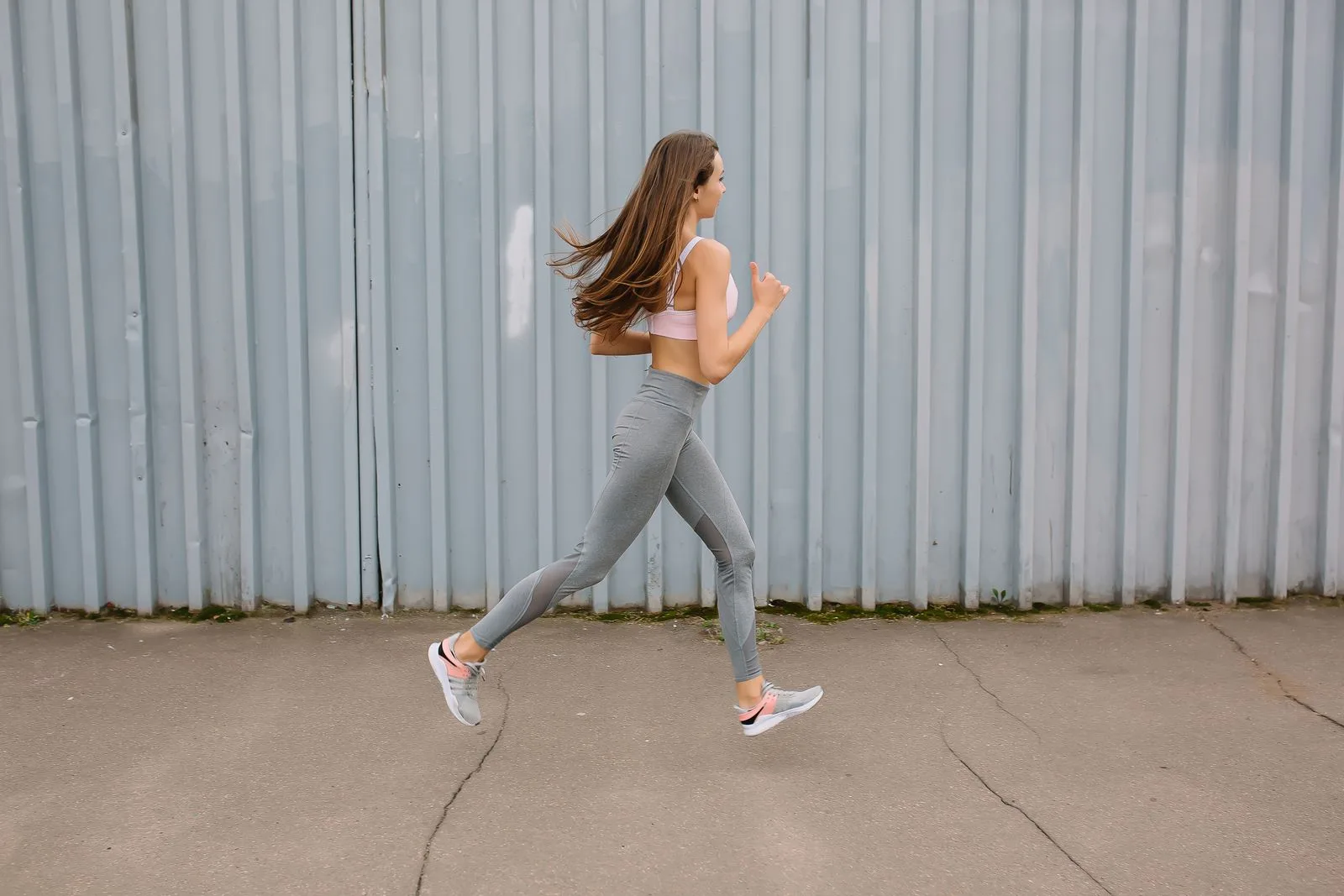
This is where the choice gets felt the most. Most premium yoga and studio leggings are nylon spandex. That smooth, cool hand and the compression are what customers expect the second they put them on. Nylon’s toughness also helps where leggings wear out first: the inner thigh and the seat.
Polyester spandex leggings make sense when you care most about drying speed, a printed design or price. Plenty of training and running leggings are polyester for exactly those reasons.
A studio legging worn for an hour indoors and a running tight worn in the rain are asking for different things. That’s the whole decision, really.
How most ranges split it
Nylon spandex usually goes into leggings, bike shorts, sports bras, bodysuits, and anything sold on softness and compression. Polyester and polyester spandex go into running tops, training shorts, tanks, light layers, and anything that has to dry fast or carry a print. Linings, liners and mesh panels can be either, and usually follow the main fabric so the whole garment dyes and washes as one.
Our own fabric library splits the same way. Our nylon spandex fabrics run from 68 to 340 GSM and mostly go into leggings, sports bras and bodysuits. Our polyester and polyester spandex fabrics run from 69 to 280 GSM and are the usual base for running tops, training shorts and light layers.
Recycled polyester and recycled nylon
Both have recycled versions, and once they’re knitted and finished, both perform like the virgin ones.
Recycled polyester (you’ll often see it called RPET) is mostly spun from post-consumer plastic bottles. It’s the most widely available recycled fibre in activewear, so it’s the easier place to start if you’re moving a range to recycled content.
Recycled nylon comes from things like old fishing nets and reclaimed carpet. There’s less choice in recycled nylon fabrics than in recycled polyester, so check which weights and constructions exist before you design a whole style around one.
If a recycled claim is going on your hangtag or product page, ask for the paperwork, not just the fabric. A GRS (Global Recycled Standard) transaction certificate can be issued for a recycled-content order and tracks the recycled material through each stage of production. More on how we handle that on our sustainability page.
How to choose between nylon and polyester
Start from the use, not the fibre. Four questions settle most of it.
How should it feel? If the product is sold on softness and compression, start with nylon spandex.
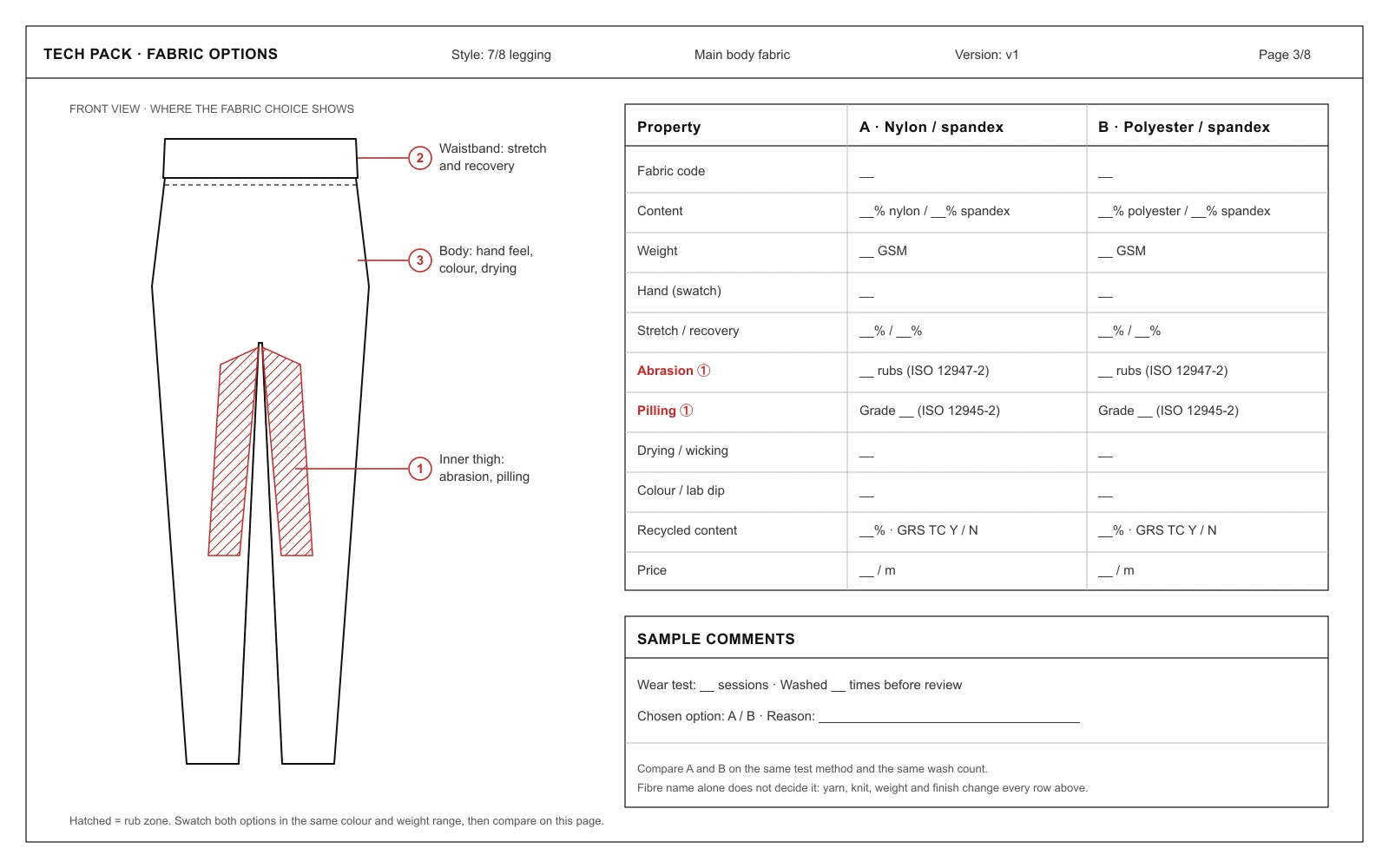
Where will it wear out? If fabric rubs fabric, look at abrasion and pilling results, not the fibre name.
Does it need to dry fast or carry a print? Then start with polyester.
What’s the target price? If it has to hit a lower retail price, polyester gives you more room.
Then swatch both. Same colour, similar weight, same finish, one in nylon spandex and one in polyester spandex. Wear them, wash them the same number of times, and put them side by side. Write the result on the fabric page of your tech pack, so the decision and the reason stay with the style. And make sure both were tested the same way, on the fabric you’ll actually use in bulk. Otherwise you’re comparing two different experiments.
Nylon or polyester: the answer for most brands
Both. Most activewear ranges use nylon where the garment is sold on feel and has to survive friction, and polyester where it has to dry fast, print well or hit a price. The fibre is the starting point. The yarn, the knit and the finish decide how it actually performs.
Developing a range with us
We make activewear in both nylon spandex and polyester spandex, with recycled options in both, and we can send swatches of specific codes from our library so you can feel the difference yourself. Tell us what the product is for, the feel you want and your target price, and we’ll suggest fabrics to compare. Our minimum is 500 pieces per colour per style. Send us your brief.