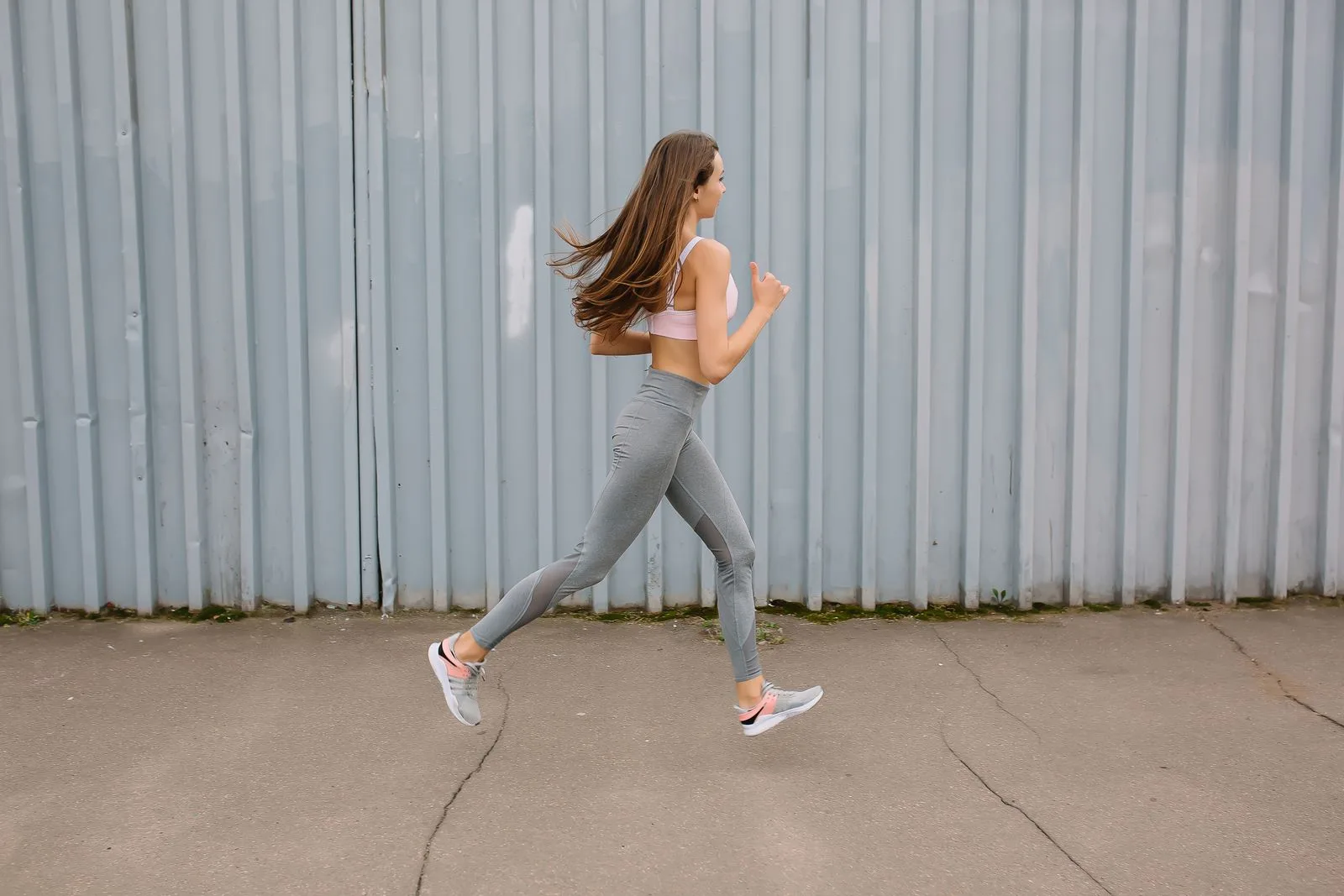
Look up “types of tank tops” and you’ll get a list of fifteen or so names: racerback, muscle tank, singlet, stringer, cami, crop, high-neck, tie-front. Useful for shopping. Less useful when you’re the one making it, because on a pattern table most of those names collapse into the same three questions.
Here is the short answer. For activewear, the main types of tank tops are the racerback, the muscle tank, the race singlet, the cropped tank and the tank with a built-in shelf bra. What separates them is three decisions: where the straps sit, how deep and how finished the armhole is, and where the hem stops. Check all three alongside fabric stretch, recovery and surface feel during sampling.
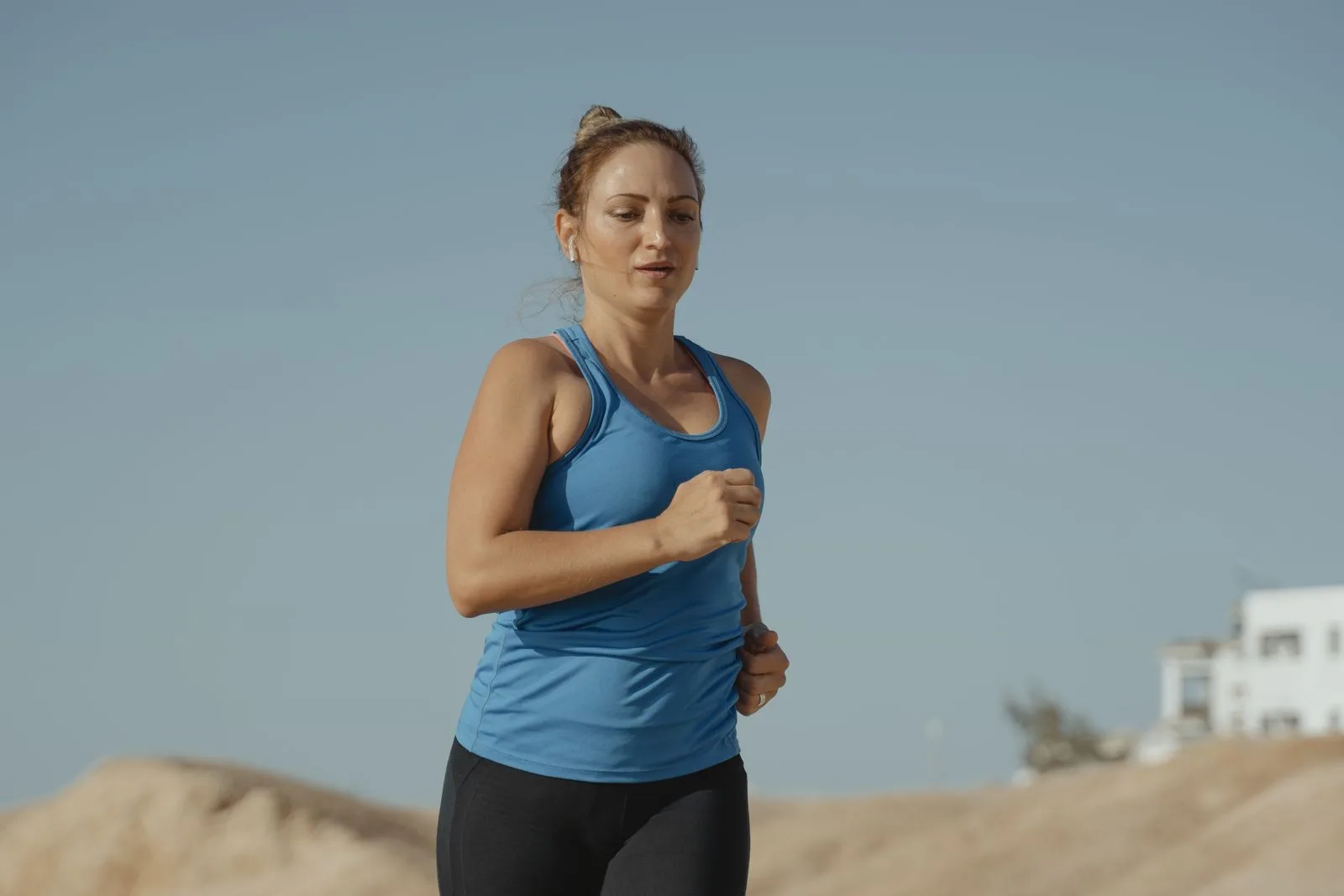
The activewear tank types, briefly
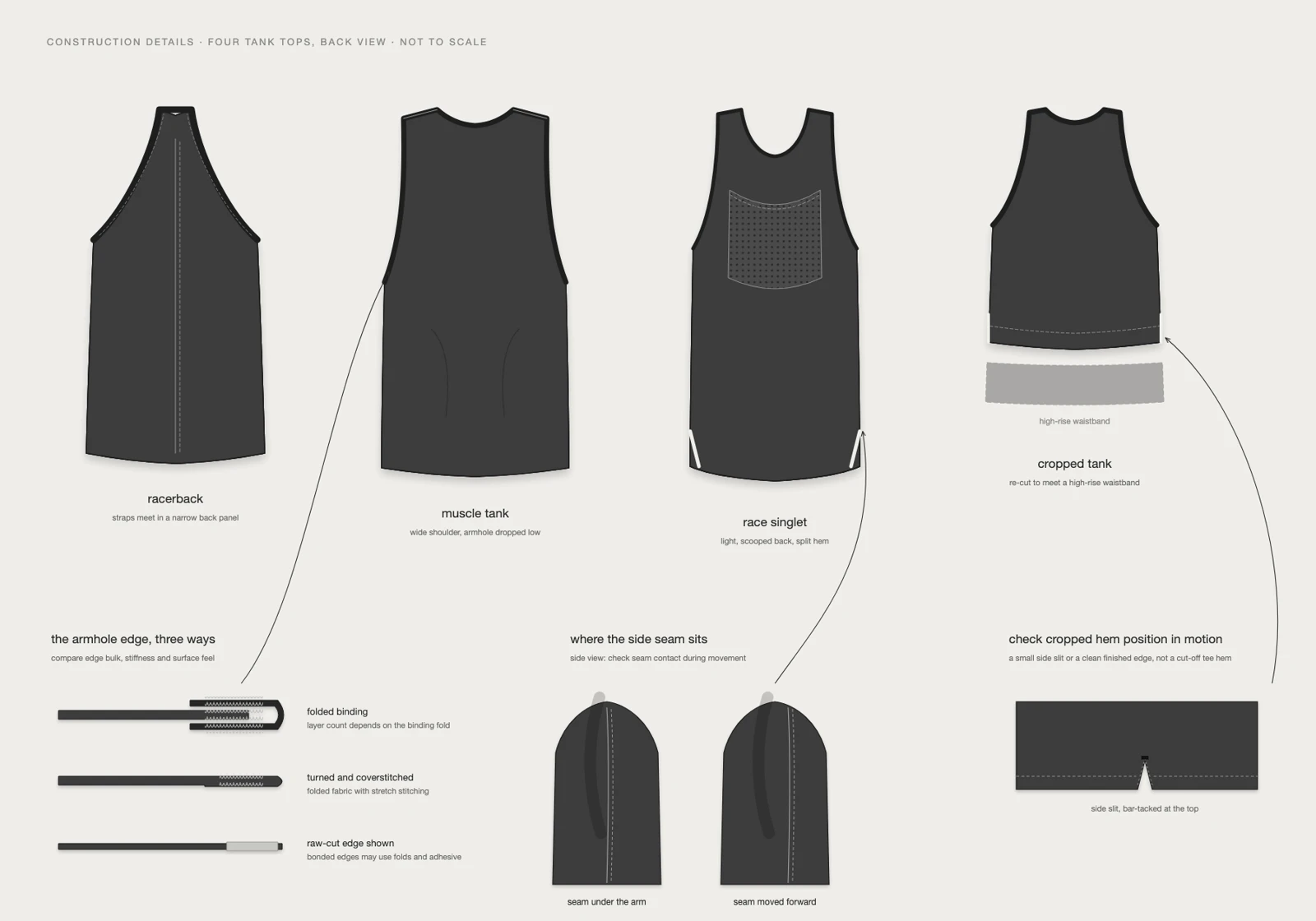
Racerback. The straps come over the shoulder and meet in a narrow panel between the shoulder blades. It leaves more of the shoulder blade uncovered, which is why it’s the default for running and studio classes, and why it pairs so easily with a sports bra underneath (the straps line up instead of fighting).
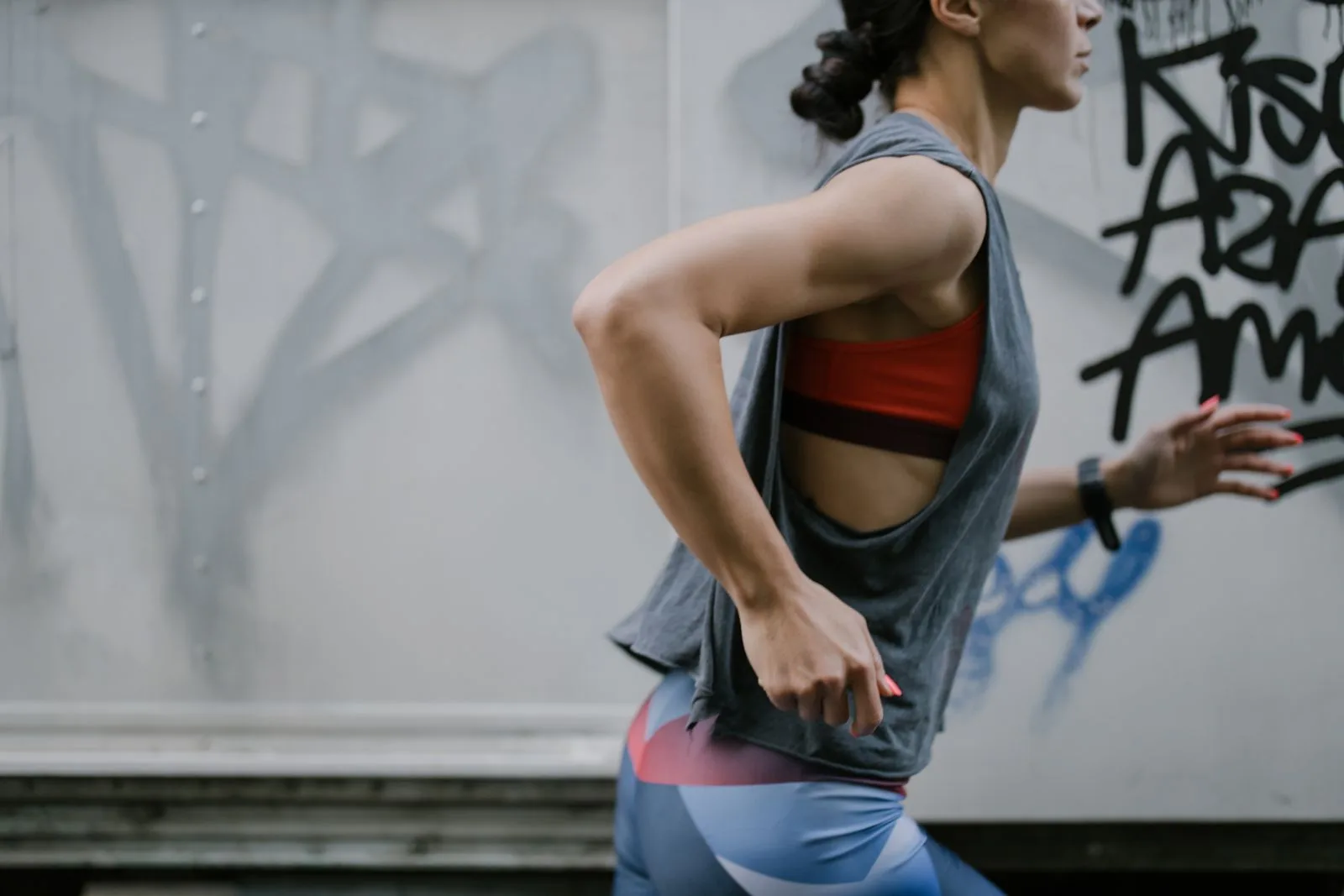
Muscle tank. Wide across the shoulder, with the armhole cut low, sometimes almost to the bottom of the ribcage. It’s the gym tank. The low armhole is the point: you see the bra or the body through the side, with more clearance around the upper arm; actual contact depends on fit and movement.
Race singlet. Lighter, closer to the body, usually with a scooped back, sometimes a mesh panel across the upper back and a split or curved hem. It’s built to be forgotten about for two hours.
Cropped tank. Stops at the waistband instead of the hip. More on this below, because its hem position needs to be checked with the intended bottoms.
Shelf-bra tank. A tank with a bra built in, usually an elastic band under the bust and a lining across the front. It sits halfway between a top and the bras in our guide to sports bra types, and it’s mostly a yoga and low-impact piece.
Stringers, A-shirts and cotton rib vests show up on the long lists too. We don’t make cotton vests, so we’ll leave those to someone who does.
Decision one: the straps
Strap position decides what the tank can be worn over and how much the shoulder can move. A racerback’s straps pull in toward the spine, so the shoulder blade is free and the straps sit where a racerback bra’s straps already are. A muscle tank keeps a wide shoulder and puts all the openness at the side instead. A singlet’s straps sit somewhere in between: wide enough not to cut in when it’s wet, narrow enough to stay out of the way of the arm swing.
The thing nobody mentions until the sample arrives: strap width alone does not keep straps in place. Position, back shape, fit and fabric recovery all affect whether they stay on the shoulder.
Decision two: the armhole (where the chafing comes from)
When a running singlet rubs under the arm, inspect the armhole edge, seam placement, fit and fabric surface together. We broke this down in a short post on Instagram, with three construction points worth checking:
- the armhole is cut too high, so the edge sits right in the armpit
- the edge is too thick, so there’s a ridge for the arm to rub on
- the side seam sits directly under the arm, so the seam meets the inside of the arm on every swing
Sweat and repeated movement can increase friction. Binding, turned hems and bonded edges differ in bulk, but the layer count depends on the fold and seam construction. Bonding can include folded fabric and adhesive; it is not automatically a single layer. Compare thickness, stiffness and surface feel on the actual sample. For a race singlet we’d usually pick a flatter edge and move the side seam slightly forward, off the line where the arm passes.
The test we’d suggest is not glamorous. A short movement check in a damp sample can reveal obvious rubbing. Follow it with a wear trial at the intended activity and duration, and repeat after washing; a brief check cannot guarantee comfort on a long run.
Decision three: the hem
Most tanks are hip length, and the hem is a simple coverstitch. Singlets often get a curved or split hem so the body can move without the top riding up over the hips.
The cropped tank is where it gets interesting. Running tops have been moving up: tanks, tees and long sleeves that stop at the waistband instead of the hip, worn with high-rise tights (we posted about it here). A cropped top is not a regular tank with the bottom cut off. The body gets re-cut so the hem meets a high-rise waistband, and the hem needs either a small side slit or a clean, flat finish so it stays down when you move. Simply shortening an existing pattern may change how the hem sits. Check ride-up in motion and adjust the body shape and hem finish if needed.
Practically, that means a cropped tank should be developed next to the legging it’s going to be worn with. If your range already has a high-rise legging, start there; our leggings page has more on how we build those.
What about fabric?
Almost every activewear tank is a knit, because the top has to move with the body. The usual choices are a light polyester or nylon jersey with some spandex for running and training, a softer brushed or peached knit for yoga and lifestyle pieces, and mesh panels where the heat builds up. Rib knits work well on fitted tanks and crops.
Our view, for what it’s worth: a tank range doesn’t need a different fabric for every style. One good running knit and one soft knit, used across the racerback, the singlet and the crop, is easier to colour-match and easier to reorder than six fabrics that each appear once.
Developing tank tops with a factory
When you brief a tank, name the type, but also say what it’s for: the sport, what goes underneath, and what it’s worn with. “Racerback, run, worn over a racerback bra, with our high-rise tight” tells a pattern maker more than a reference photo alone. Then check the three decisions on the first sample: strap position, the armhole edge, and where the hem sits when you move.
New Dong Huang (NDH) has made activewear in Dongyang, China since 1999, and tanks sit alongside the leggings, bras and shorts we make for brands in the US, Australia and Europe. Samples take 7–10 days. If you’re a growing brand building out tops for the first time, our page for DTC activewear brands explains how we usually start.
If you have a tank in mind, or one that rubs and you can’t work out why, send us the details through our contact page and we’ll take a look.