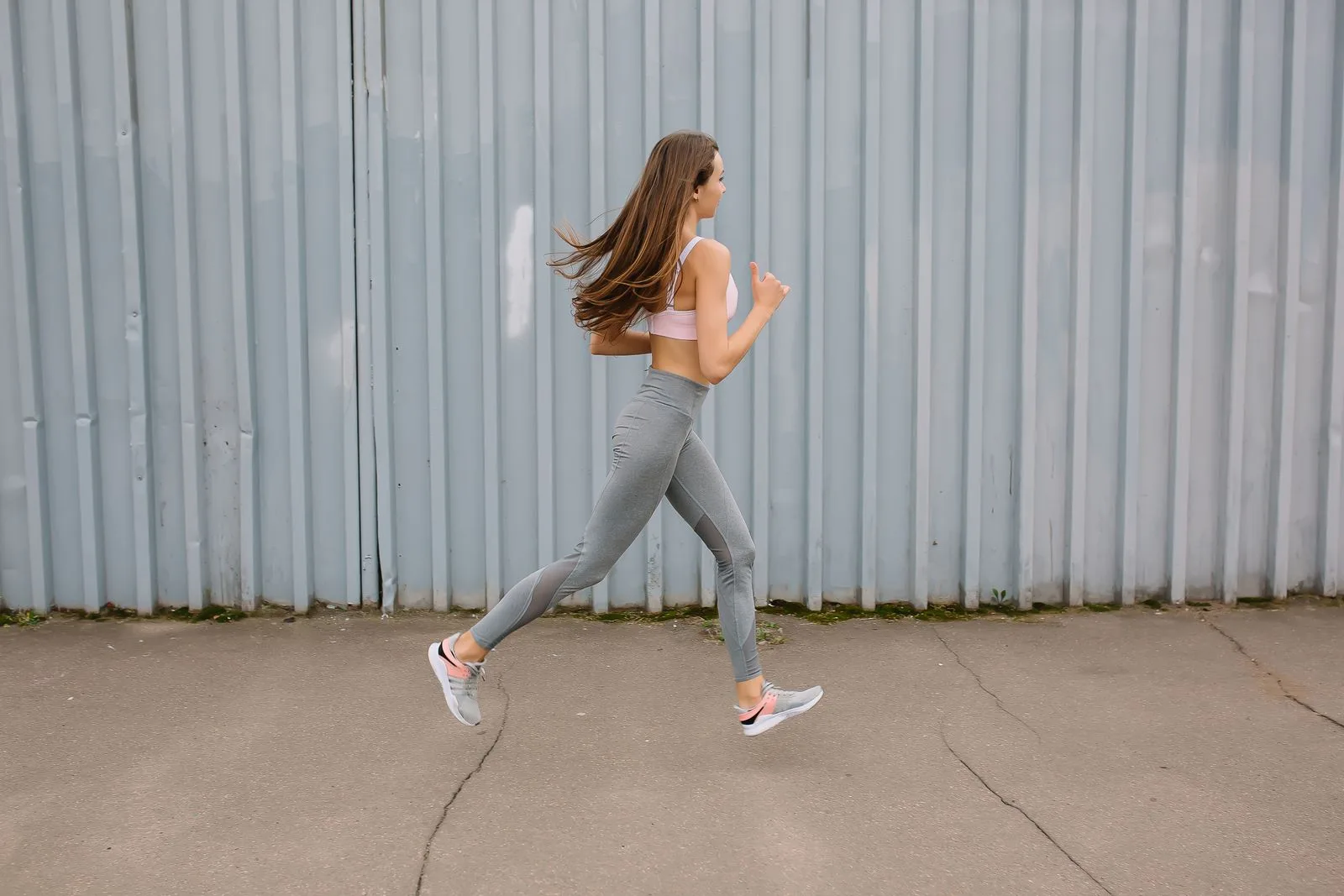
Pick up a long sleeve training top and look at the shoulder. If a seam runs along the top of it, right where a backpack strap sits, that’s a set-in sleeve. If instead a seam runs at an angle from the neckline down to the armpit, and the top of the shoulder is one smooth piece, that’s a raglan sleeve. Most people have worn both for years without noticing. Their shoulders noticed.
A raglan sleeve is a sleeve that runs in one piece all the way up to the neckline, joined to the body by a diagonal seam from the underarm to the collar. There is no shoulder seam. Activewear uses it because it gives the arm more room to reach, keeps seams off the top of the shoulder, and makes a two-colour top easy to cut.
Where the name comes from
The cut is usually traced back to Lord Raglan, a 19th-century British army officer whose coats were made this way. That’s all the history you need. The rest of this is about what the seam does on a garment that gets sweated in.
New Dong Huang (NDH) has been making activewear since 1999, and raglan or set-in is one of the first fit decisions on any long sleeve top. So here’s how it plays out on the factory floor.
Raglan vs set-in sleeve: what actually changes
A set-in sleeve is the classic tee construction. The body has a shoulder seam, the sleeve is a separate tube, and it gets sewn into a round armhole. A raglan sleeve swaps the shoulder seam and the round armhole for two long diagonal seams. Same garment, different map of seams. And on activewear, where a seam sits matters more than how it looks on a hanger.
The top of the shoulder. On a set-in sleeve the shoulder seam sits exactly where a running vest, a hydration pack or a sports bra strap goes. Under a strap, that seam gets pressed and rubbed with every step. On a raglan the top of the shoulder is plain fabric, and the seam runs down the front and back, out of the strap’s way. For runners this is honestly the main reason to choose it.
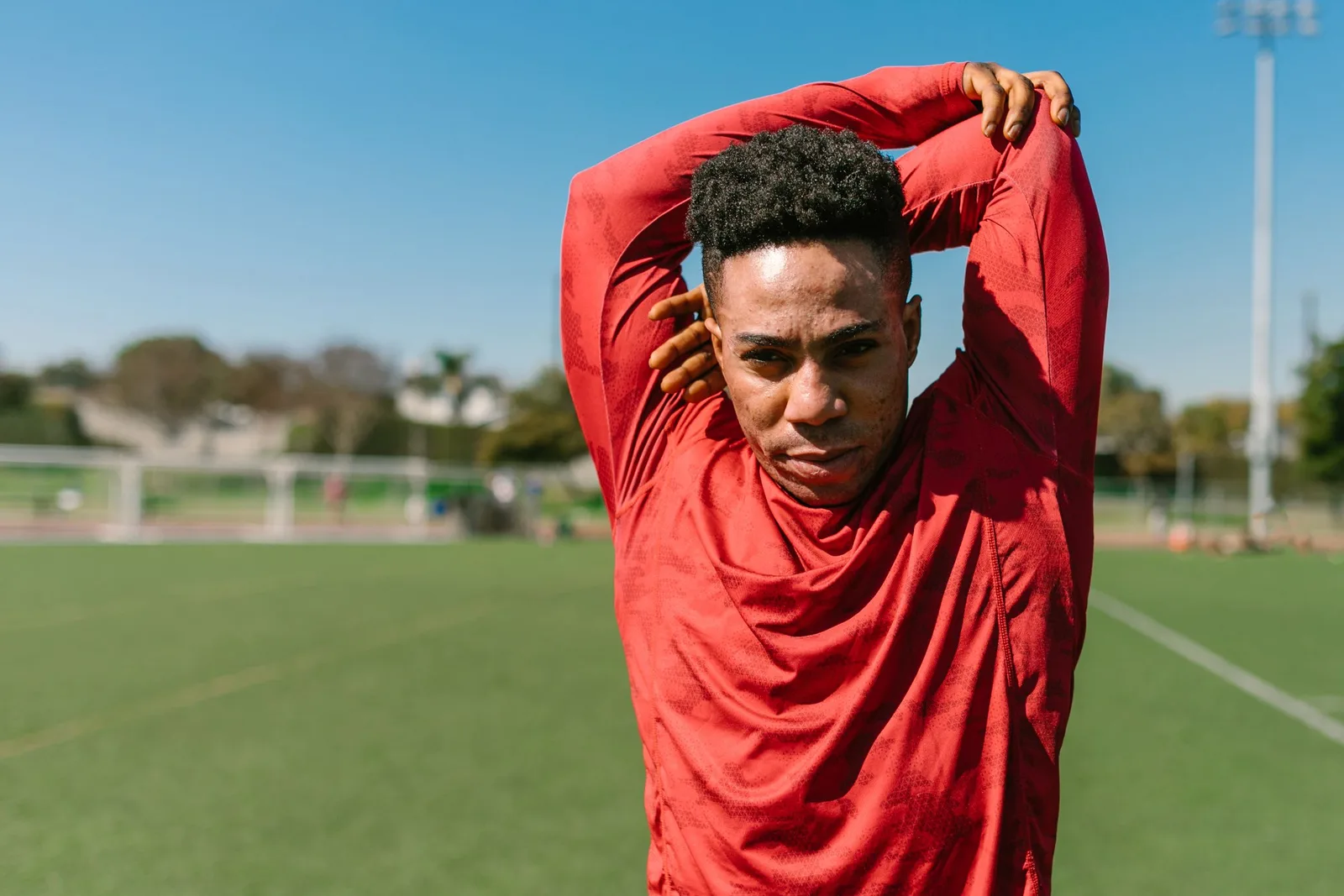
Reaching overhead. With a set-in sleeve, the armhole is a fixed ring. Lift your arms above your head and the sleeve pulls the whole body up with it, which is why the hem of a fitted tee climbs when you reach for a bar. A raglan sleeve is part of the shoulder, so there’s more give through the top of the arm and less pull on the body. The catch: in a good four way stretch knit, a well-cut set-in sleeve also moves fine. Raglan helps most in fabrics with less stretch and in looser fits.
Fit across sizes. Because there’s no shoulder point to land on the wearer’s actual shoulder, a raglan forgives a wider range of shoulder widths. That’s useful when one size has to work for a lot of bodies. The flip side is that a raglan can look a bit soft and sloped on a very fitted top. If you want a sharp, tailored shoulder line, set-in usually looks cleaner.
Colour and fabric changes. The diagonal seam is a natural line to switch colour. Raglan tops with a contrast sleeve are the old baseball tee trick, and it still works on training tops. You can also change fabric at that seam, for example a lighter knit on the sleeve than on the body.
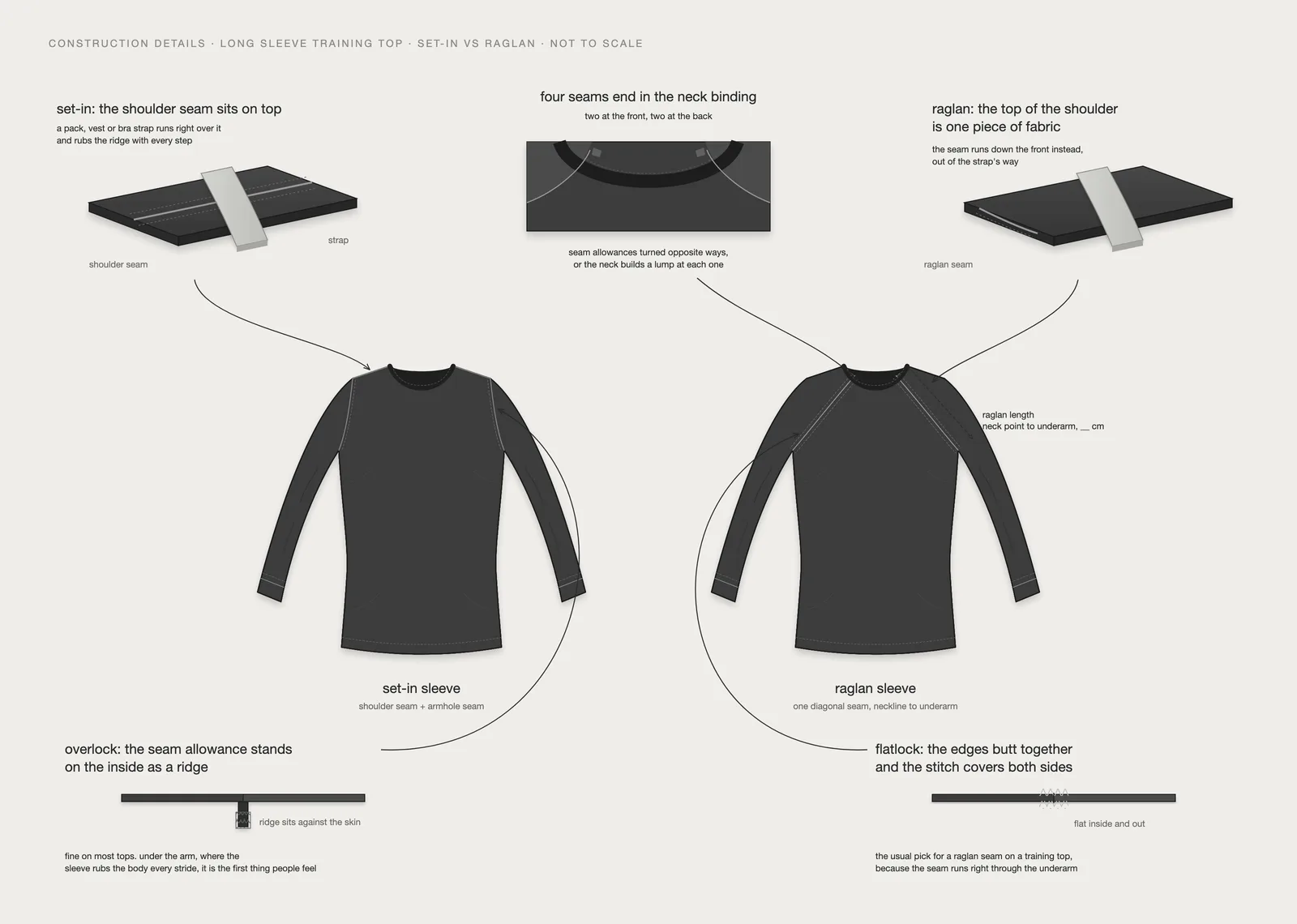
The neckline. This is the one people don’t think about until the first sample. A raglan puts four seams into the neckline: two at the front, two at the back. The neck binding has to cross all four. If the seam allowances all fold the same way, you get a little lump at each crossing and the neck won’t lie flat. The fix is to turn them in opposite directions. On a first raglan sample, those four crossings are the first thing to check.
Types of raglan sleeve
A full raglan is the version above: the sleeve runs right up to the collar in one piece. It’s the most common on training tops and base layers.
A saddle shoulder is a cousin. The sleeve extends across the top of the shoulder as a strip, so you get two seams running parallel to the shoulder instead of a diagonal. You see it more on knitwear and outer layers than on performance tops.
A two-piece raglan splits the sleeve with a seam along the top of the arm, from neckline to wrist. That extra seam lets the pattern shape the shoulder more closely, so the top looks less sloped. It’s worth considering if a standard raglan looks too relaxed on your fit model.
And then there’s the half raglan, where the diagonal seam stops partway and turns into a short shoulder seam. It’s less common in activewear, mostly a styling choice.
Which seam goes on a raglan
A raglan seam runs right through the underarm, where the sleeve rubs against the body every time the arm swings. So the seam type matters more here than on most seams in the garment.
An overlock seam leaves the seam allowance standing on the inside as a small ridge. On a lot of tops that’s fine. Under the arm, on a long run, it’s the first thing people feel. A flatlock butts the two edges together and covers them with stitching on both sides, so it lies flat inside and out. On raglan training tops and base layers, flatlock is the usual pick. We go through the different versions in our guide to flatlock stitch types.
When we’d pick raglan, and when we wouldn’t
Our rule of thumb: if the top will be worn under a strap, or the arms go overhead a lot, start with raglan. That covers most running long sleeves, base layers and colour blocked training tops. If the top is meant to look sharp and fitted, like a slim tee that gets worn to the gym and then to lunch, a set-in sleeve usually wins.
Neither is better in general. It depends on the garment, the fabric, and what the person wearing it is going to do. Decide it on the actual style, not on a trend board.
What to put in the tech pack for a raglan sleeve
A raglan changes how a few measurements are taken, and that’s where first samples go wrong. Spell these out:
Raglan length, measured along the seam from the neck point to the underarm. Sleeve length, measured from the centre back neck to the cuff, because there’s no shoulder point to measure from. Seam type for the raglan seams (flatlock or overlock plus coverstitch) and which way the seam allowances go at the neckline. And the colour or fabric of each piece, if the sleeve and body are different.
If you only have a reference garment, send it. A sample in hand settles more questions than a page of measurements.
Developing training tops with us
We make training tops, base layers and running long sleeves in both raglan and set-in constructions, and we’re happy to sample both versions so you can compare them on a real body. Samples take 7–10 days, and our minimum is 500 pieces per colour per style. A lot of the brands we work with are direct-to-consumer brands starting with two or three styles. If you have a top in development, send us the tech pack or the reference garment and we’ll tell you which sleeve we’d use and why.