“Add mesh panel” shows up on a lot of first tech packs. It’s a reasonable thing to write, and it tells the factory about as much as “add fabric” would. Mesh is a family, not a fabric. The one that holds a bra wing flat and the one that lets air through the back of a running tee have almost nothing in common except the holes.
Mesh fabric is a knit with open holes built into its structure. In activewear it is usually nylon or polyester, often with spandex, and it comes in a few distinct types: power mesh (tight and stretchy, used to hold a panel), bird’s-eye mesh (small holes, still covers skin), open mesh (big holes, maximum airflow) and micro mesh (fine and soft, used for liners). Which one you need depends on the job the panel has to do.
What is mesh fabric made of?
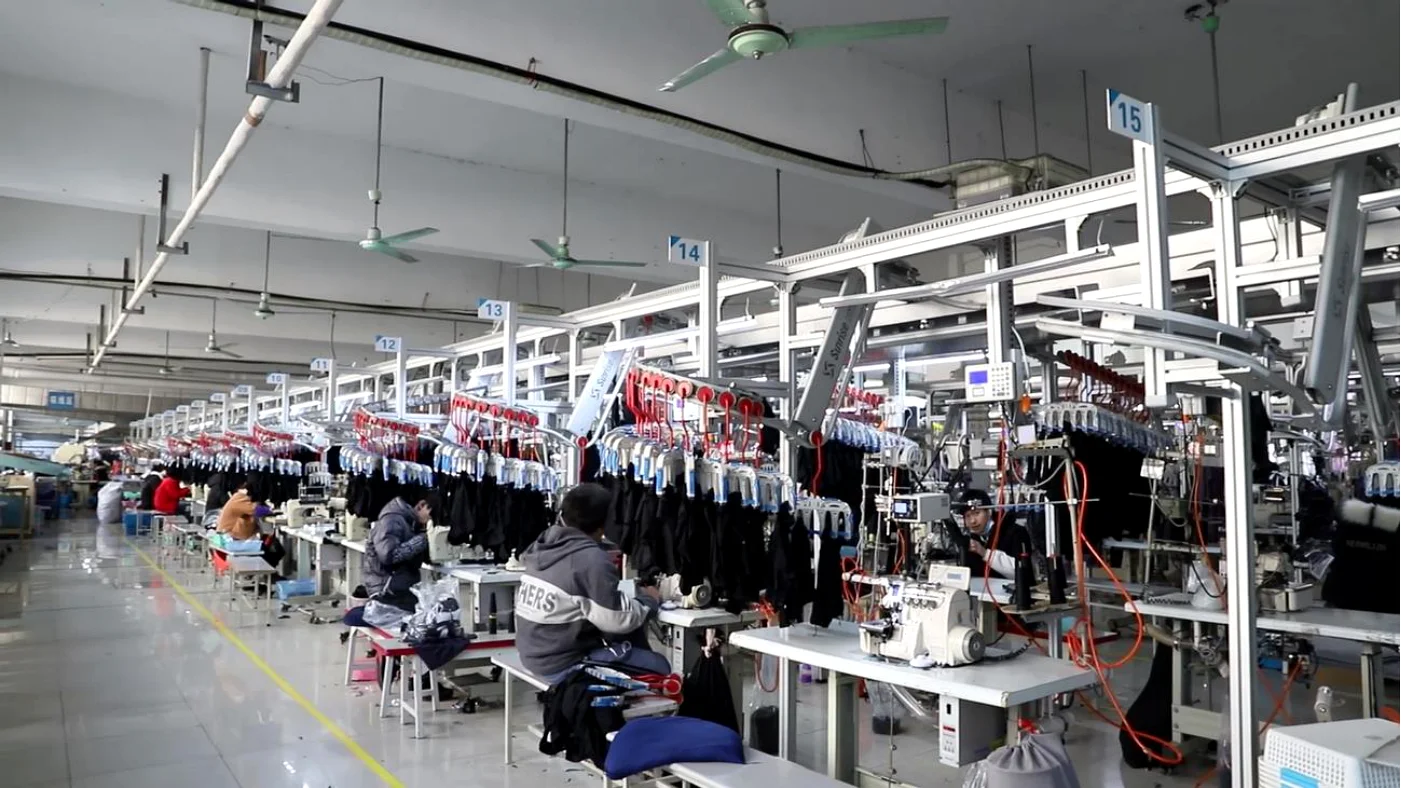
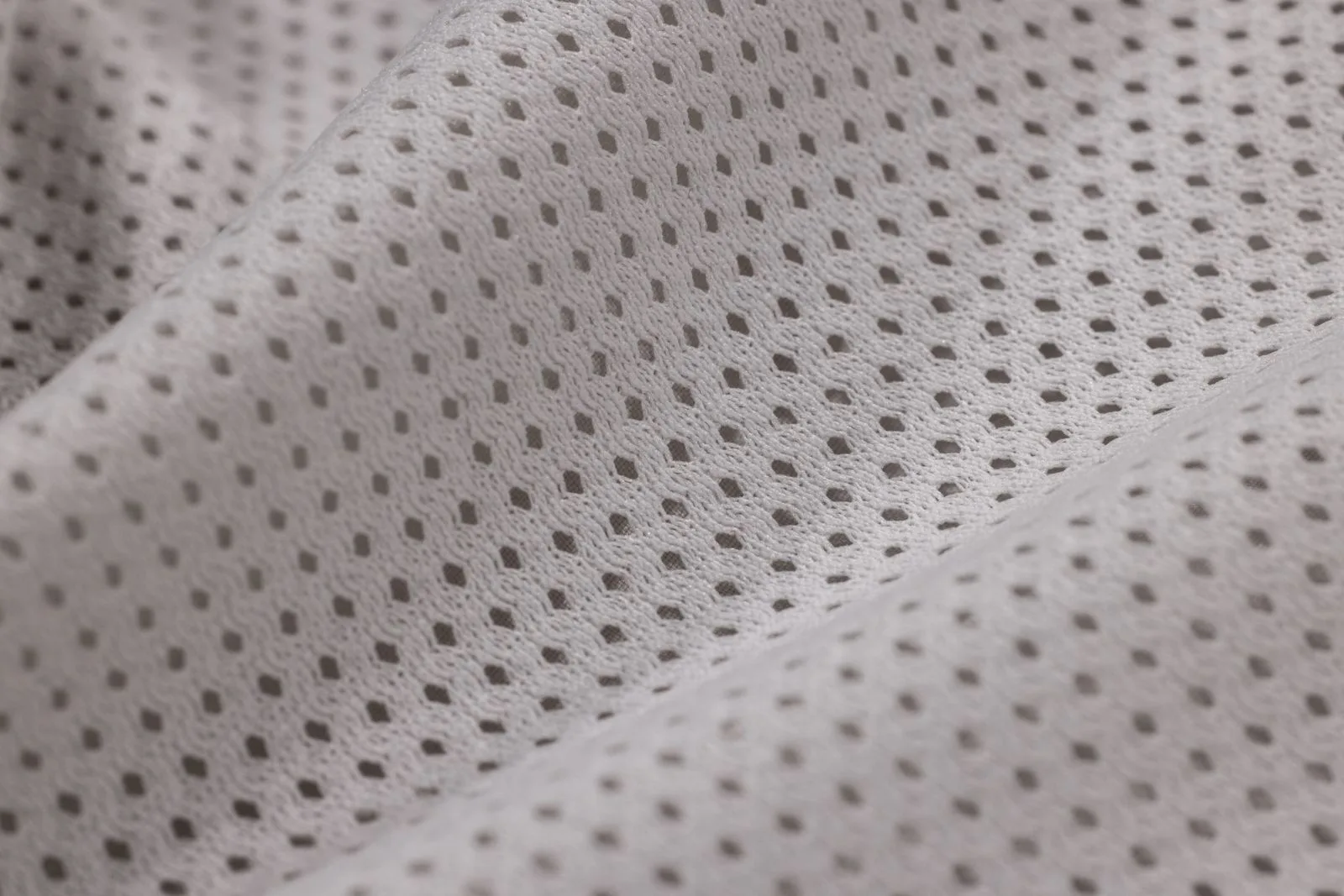
Almost all the mesh in sportswear is knitted, not woven. The holes aren’t punched out afterwards. They come from the knit itself: the machine leaves gaps between groups of loops in a repeating pattern, and that pattern is what makes one mesh look like a honeycomb and another look like a fine screen. Most of it is warp knitted, which is why good mesh doesn’t run or ladder when you snag it.
The fibre is the same short list as the rest of the garment. Polyester mesh is the everyday one for tops, jerseys and shorts because it’s light and dries fast. Nylon mesh feels softer and is common in bras and leggings. Add spandex and you get stretch mesh, and at the firm end of that, power mesh. If you want the longer version of that fibre choice, we wrote it up in nylon vs polyester.
What are the main types of mesh fabric?
For activewear, four types cover nearly everything. Name the hole, and the job follows.
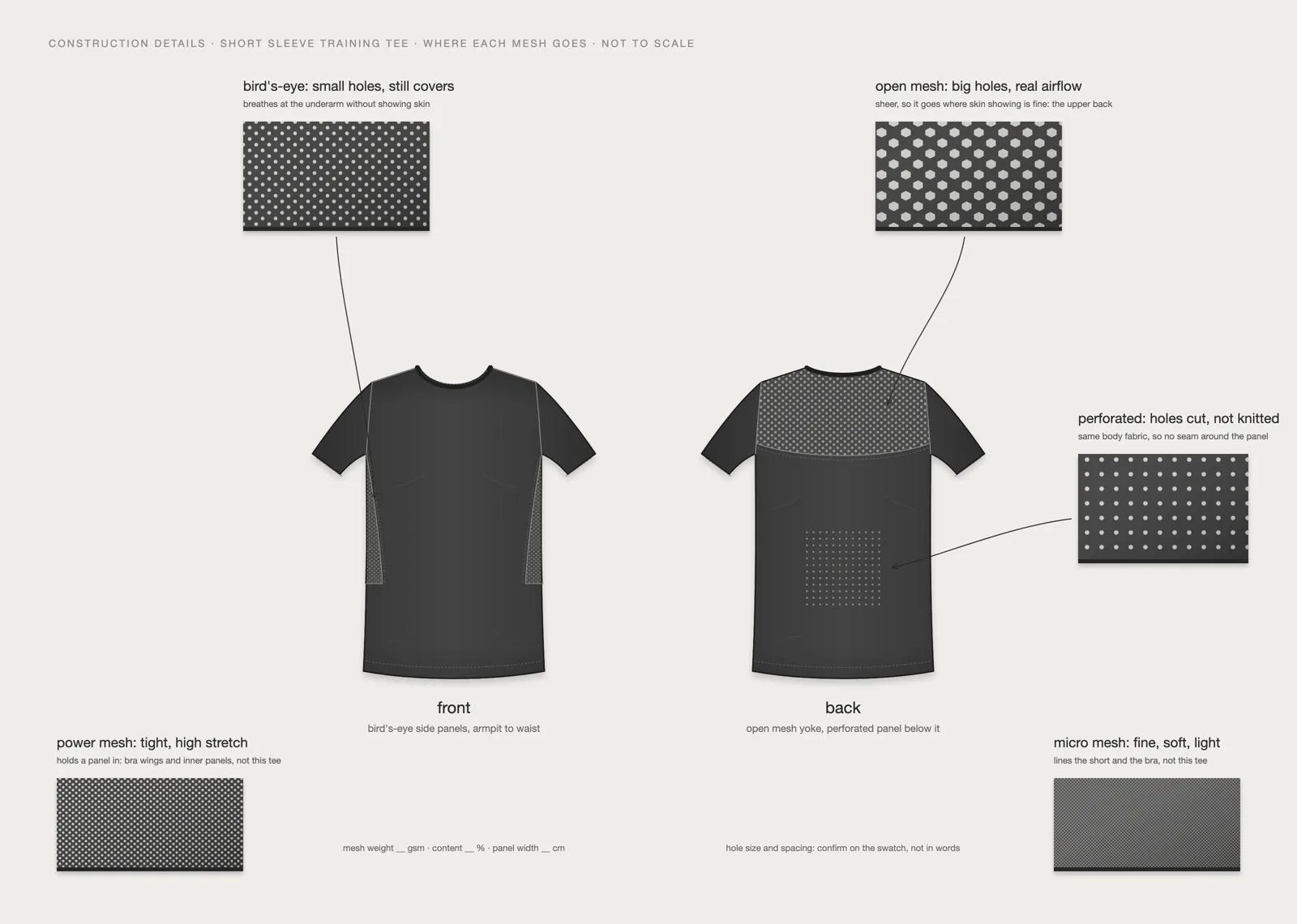
Power mesh is a tight, high-stretch mesh with tiny holes. It’s there to hold, not to breathe. You find it as the inner layer of a bra wing, a firming panel inside a legging, or a lining that keeps a pocket from sagging. It’s the one we get asked about most for sports bras.
Bird’s-eye mesh has small round holes set in a solid-looking knit. Up close it breathes; from a metre away it reads as a normal fabric. That’s why it goes at the underarm and down the side seams. You get the airflow without the panel turning see-through when the arm goes up.
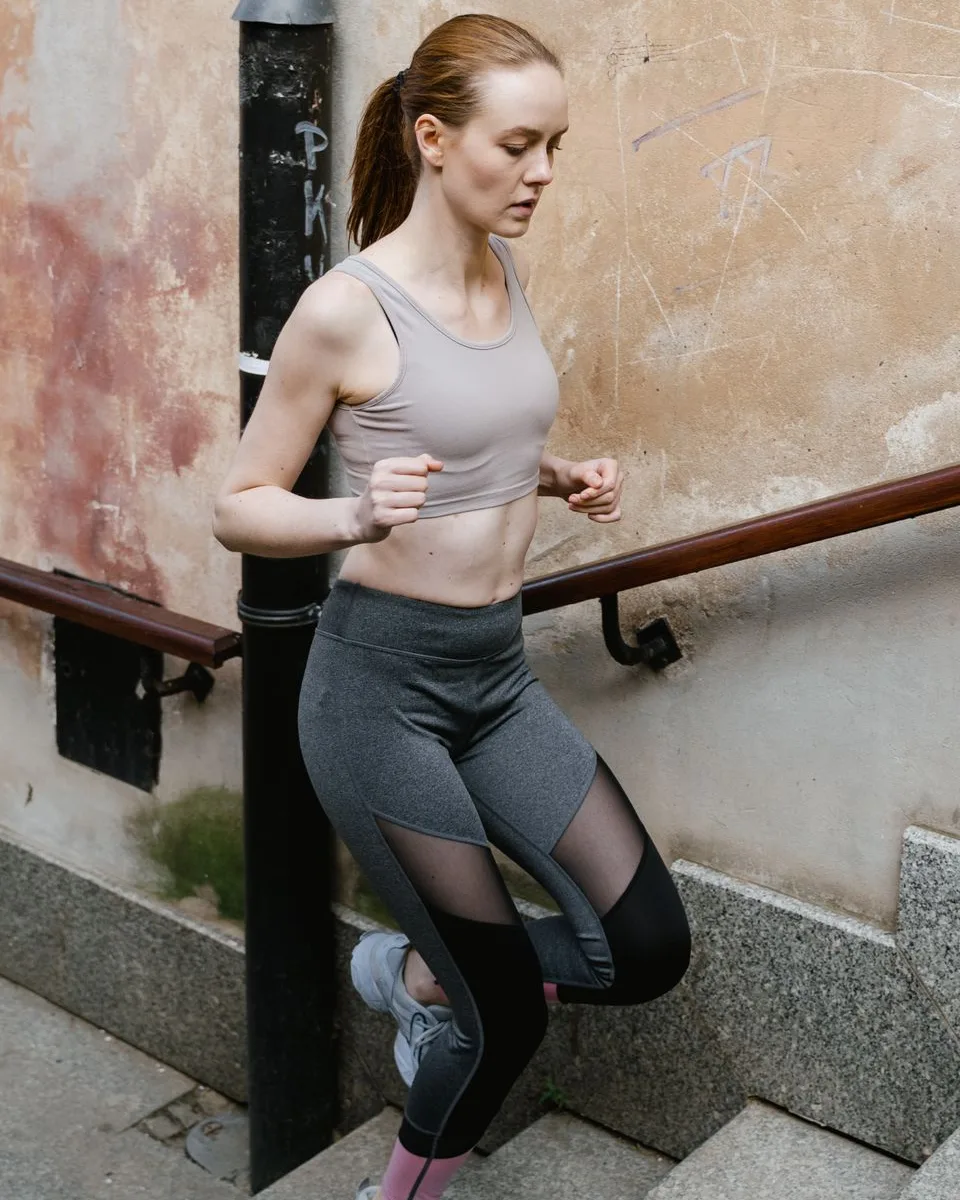
Open mesh has big holes and real airflow. It’s also honest about what it is, which is mostly hole with some yarn around it, so it’s sheer. It goes where showing skin is fine: the upper back of a running tee, a vent behind the knee on a legging, an overlay on a training top.
Micro mesh is the fine, soft one. It lines the inside of running shorts and sits behind the cups of a bra. Nobody sees it, which is a good sign it’s doing its job.
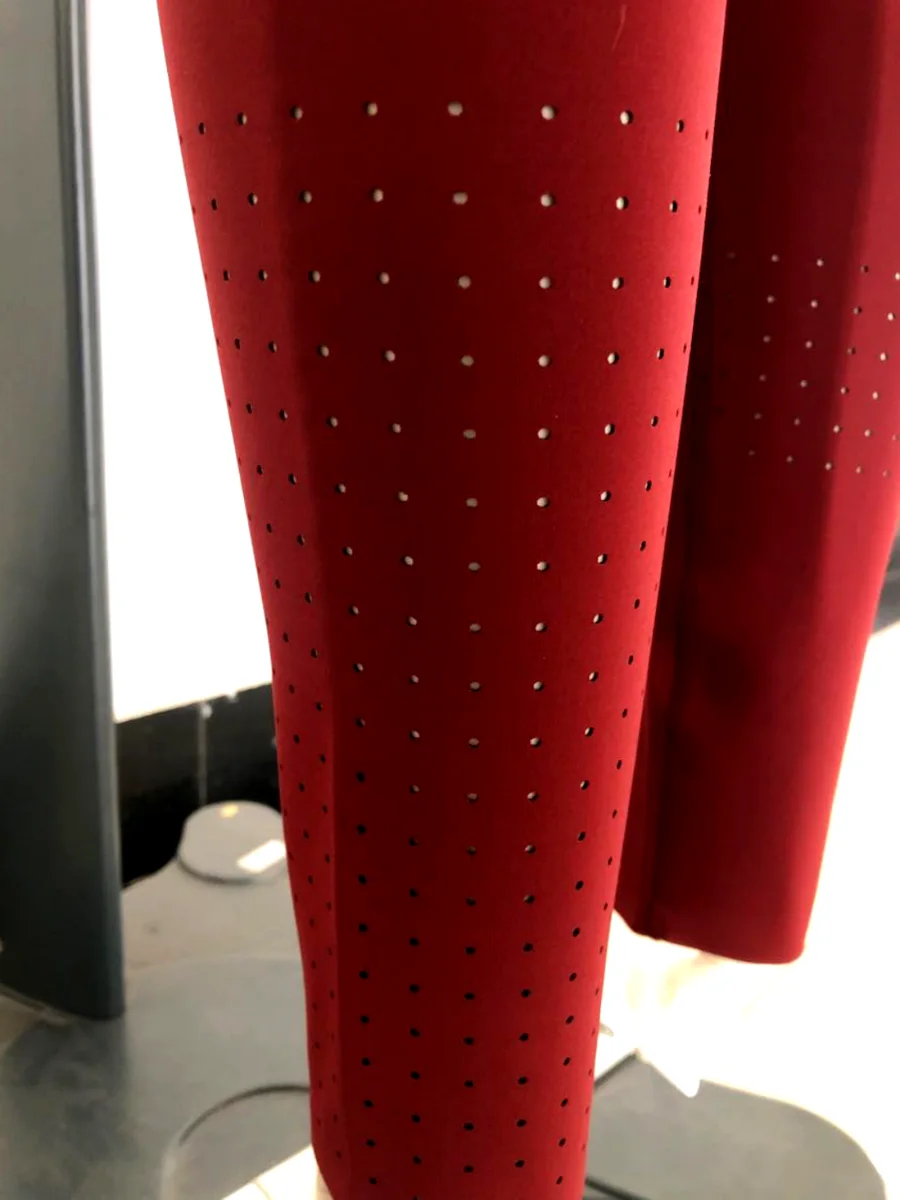
Two cousins come up often enough to mention. Spacer mesh (also sold as 3D or air mesh) is two knitted faces held apart by a layer of yarn, so it’s thick and cushioned; it’s more at home in bra padding and shoe uppers than in a tee. And perforated fabric isn’t knitted mesh at all. The holes are cut into a solid fabric, usually by laser, which matters for the next question.
Where should mesh go on a garment?
There are three ways brands use it, and they’re three different garments in the sample room.
All-over mesh means the whole top is mesh. It breathes everywhere, it’s light, and it’s usually sheer, so it tends to be worn as a layer or over a bra.
A mesh panel goes only where you sweat: underarms, the upper back, the inner thigh. This is the most common use, and the panel needs its own pattern piece, so it adds seams. Each of those seams is a place that can rub, which is why panel seams are usually flatlocked rather than overlocked.
A perforated panel is cut into the body fabric itself. Same fabric, same colour, no seam around it. You lose the softness and stretch of a real mesh, and the holes are a size the laser can cut, not a knit structure, but on a clean minimal top it’s often the tidier answer.
Does the mesh have to match the main fabric?
This is where mesh catches people out, and it’s the part only the factory floor really sees. The mesh is a separate fabric. It’s often a different fibre or yarn from the body, and it’s dyed in its own bath. So a black mesh panel next to a black body fabric can come out a slightly different black, especially under shop lighting. It needs its own colour approval, the same as the main fabric.
Shrinkage behaves the same way. Mesh and body fabric can move differently in the wash, and if they move by different amounts, the panel puckers along the seam. The fix is boring: wash-test the mesh and the main fabric together on the first sample, not separately.
And put the panel up against a light. Bird’s-eye that looks opaque on a table can show more than you expected once it’s stretched over a body.
What should a tech pack say about mesh?
Enough that two factories would make the same thing. That means the type (power, bird’s-eye, open, micro, or perforated), the fibre content, the weight in GSM, the colour standard, and the exact placement drawn on the flat sketch with the seam type. If you have a mesh you like from another garment, send a photo or a swatch. Hole size and spacing are much easier to agree on by looking than by describing.
If you don’t know the weight or content yet, say so. We would rather work it out with you on the first sample than guess. At New Dong Huang (NDH) samples take 7–10 days, so trying two meshes on the same style is a cheap way to settle it. Our fabric library is a good place to start.
We also did a short visual version of the four types on Instagram, if you’d rather see the holes than read about them: four meshes, four jobs.
Working on a style with mesh?
Send us the sketch and tell us what the panel needs to do: hold, breathe, cover, or line. We’ll suggest a mesh, sample it, and show you how it sits next to the main fabric. Get in touch here.