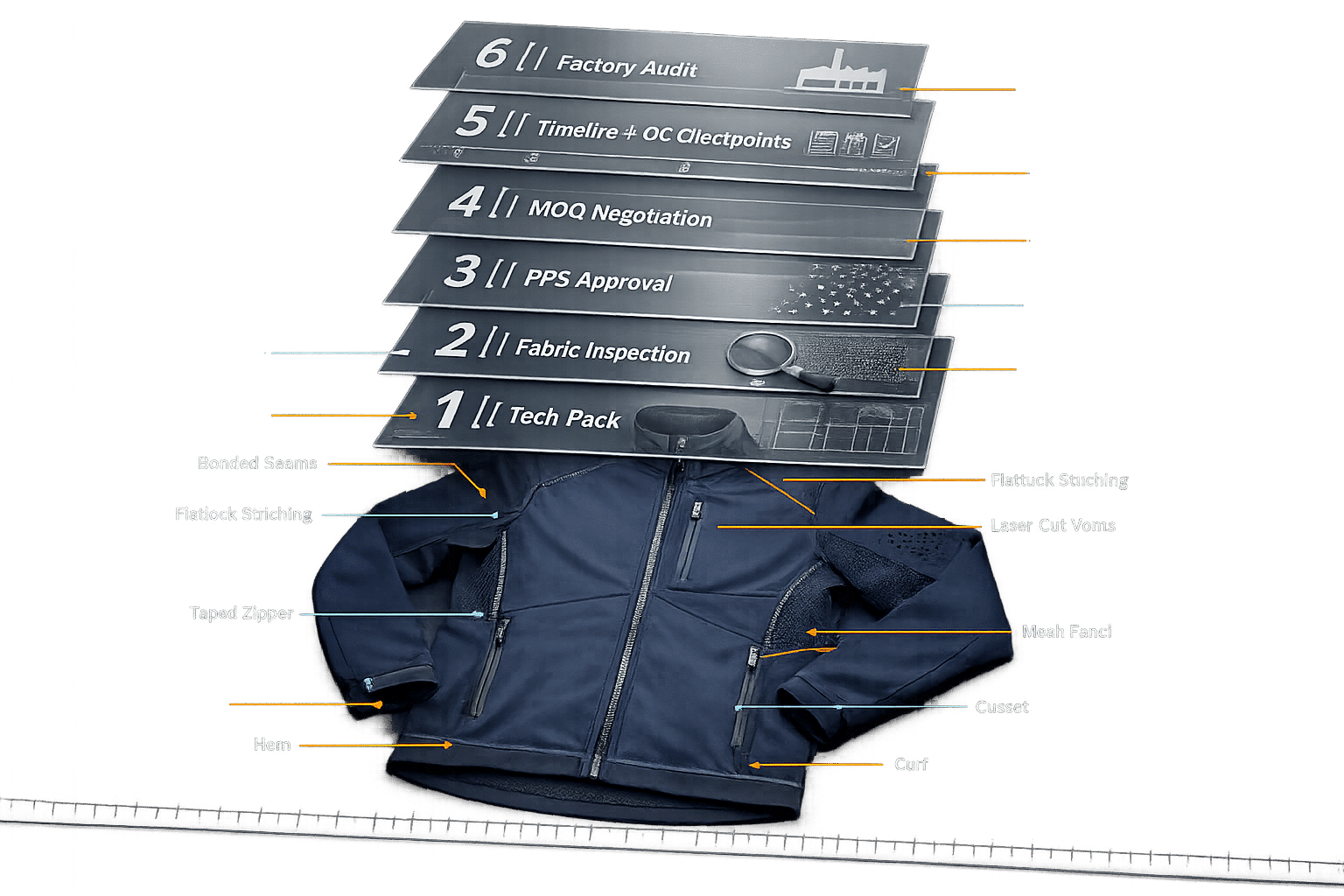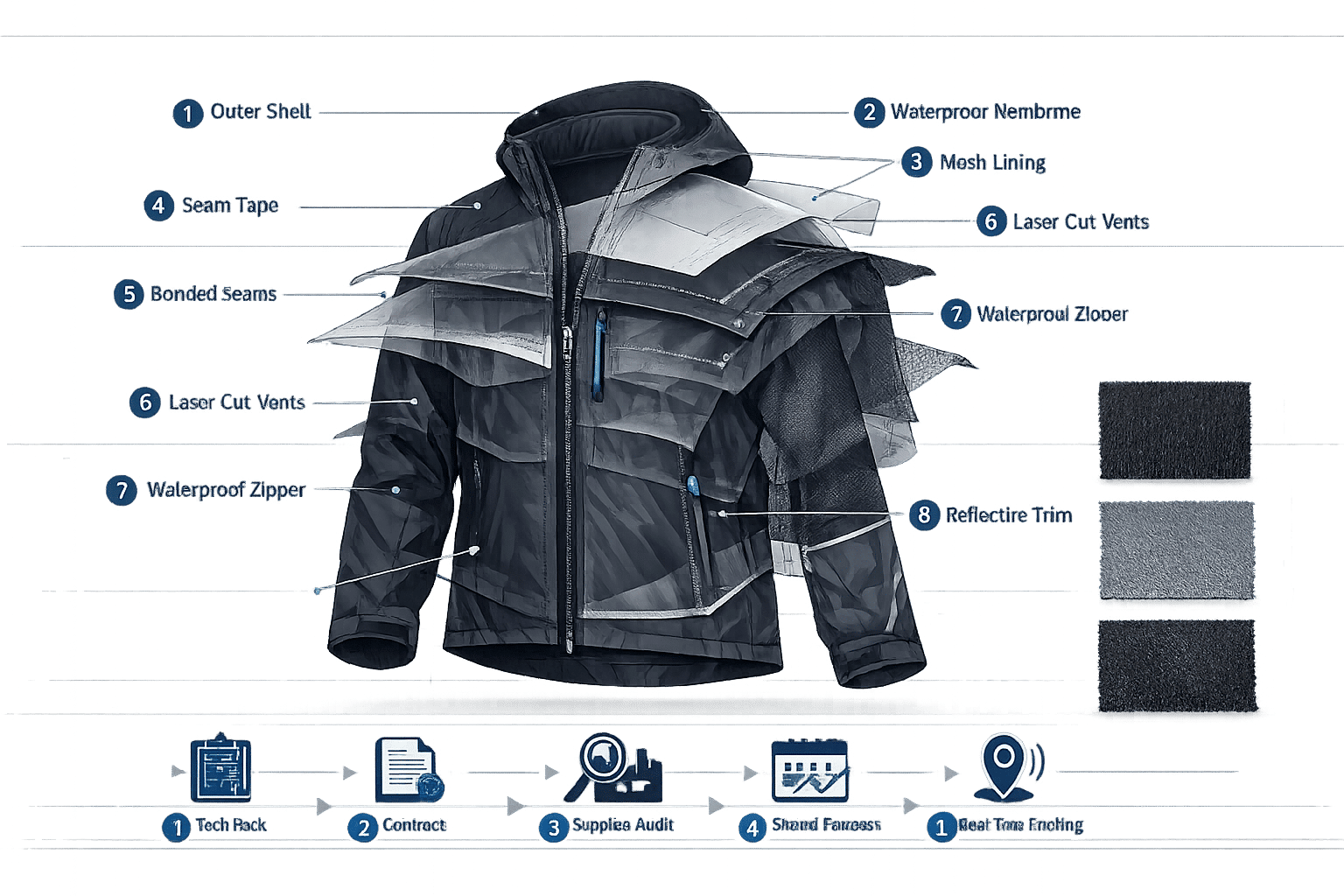
Want to avoid production delays with Chinese factories? Here’s how:
The key to faster lead times lies in detailed planning, clear communication, and strong supplier relationships. From tech packs to milestone tracking, every step matters. Here’s a quick breakdown:
- Tech Packs: Finalize all product details upfront to avoid costly revisions.
- Communication: Use tools like WeChat for real-time updates, but confirm decisions via email.
- Contracts: Include delivery dates, penalties for delays, and bonus incentives for early completion.
- Supplier Audits: Verify factory capacity and ensure sub-suppliers are reliable.
- Forecast Sharing: Help suppliers pre-book raw materials to reduce sourcing delays.
- QC Checkpoints: Inspect materials and production progress at multiple stages.
- Technology: Use ERP systems and real-time tracking tools to monitor production.
Pro Tip: Align production schedules around major Chinese holidays like Lunar New Year to avoid shutdowns. Small delays in fabric sourcing can ripple into weeks of lost time – plan ahead.
Want specifics? Read on for actionable strategies to meet deadlines and improve efficiency.
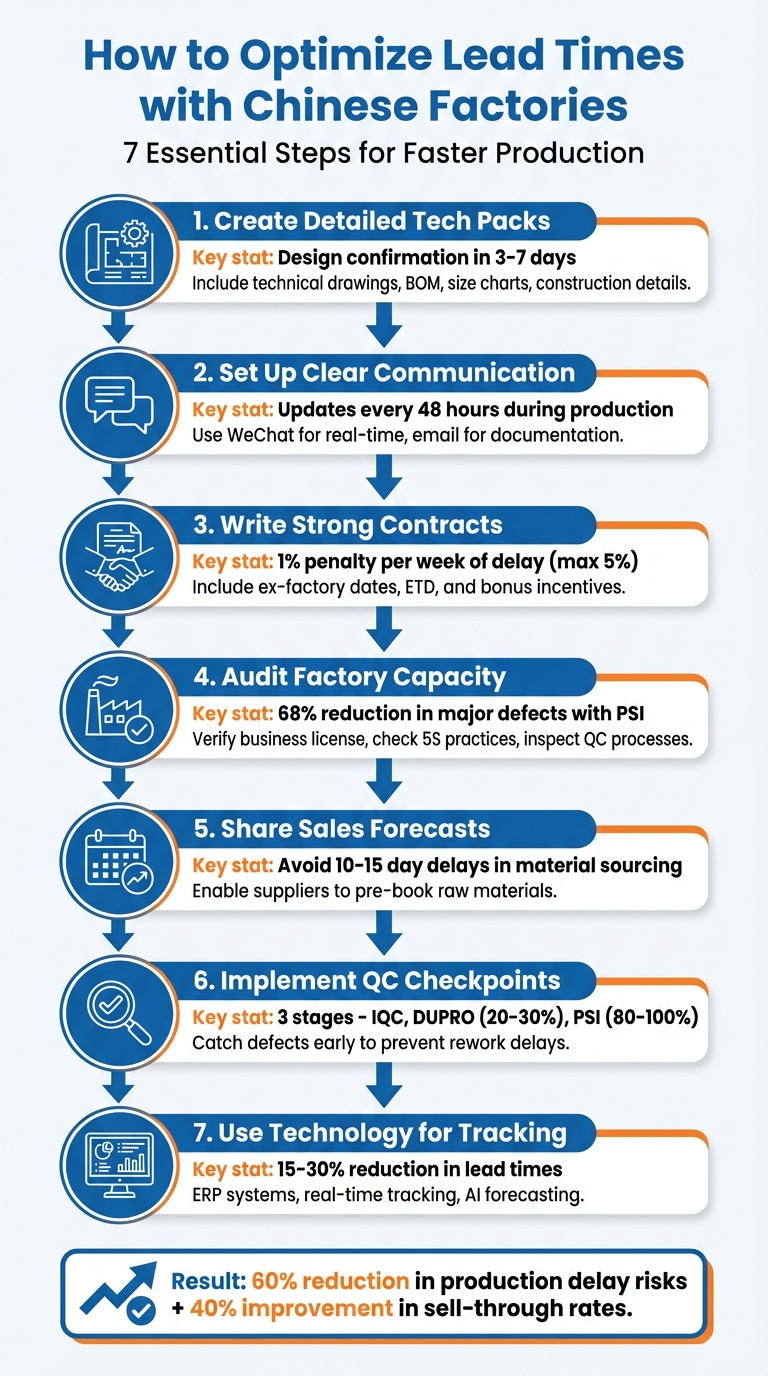
7-Step Process to Optimize Lead Times with Chinese Factories
Create Detailed Tech Packs Before Production Starts
A tech pack serves as the blueprint for your product, outlining every detail – from stitches to labels – to eliminate confusion and avoid delays.
"A tech pack is your product instruction manual. The best tech packs are simple, complete, and easy to read." – Ninghow
The sampling phase usually takes anywhere from 2 to 8 weeks. Once the tech pack is finalized, a prototype can typically be created within 7–10 days. However, unclear or incomplete documentation can stretch this process to 4–6 weeks, especially for complex designs or multiple fit adjustments. Each revision not only extends the timeline but also increases costs. Prototype samples can cost between $50 and $200, while pre-production samples (PPS) range from $80 to $300.
What to Include in a Tech Pack
A well-prepared tech pack should cover every production detail to avoid miscommunication. Start with clear technical drawings – these can be flat sketches or digital illustrations that visually communicate the garment’s design. Include a detailed Bill of Materials (BOM) that specifies fabric type, weight (measured in GSM), stretch percentages, coatings, and precise Pantone color codes. Size charts should list exact measurements and tolerances – for example, a chest width of 19.7 inches with a ± 0.4-inch allowance – to ensure proper fit.
Construction details are equally important. Specify stitch types, seam types, and areas prone to stress. List all trims, accessories, and decorations, along with any required artwork files or templates. Don’t overlook packaging requirements, such as dielines for artwork, barcodes, carton details, and folding instructions. For regulated products like baby items, include compliance information (e.g., EN71, CPSIA, or CE certifications).
By addressing these details, you create a clear roadmap for production and reduce the risk of delays or costly errors.
How Tech Packs Prevent Delays
A detailed tech pack streamlines communication by reducing back-and-forth discussions. Manufacturers can provide accurate quotes upfront, and the risk of unexpected pricing changes is minimized. The tech pack also serves as the "golden standard" for quality control, guiding inspectors during Incoming, In-Process, and Final QC checks. Once the pre-production sample (PPS) is approved, lock in the design to maintain the production schedule. Finalizing and stamping the tech pack and golden sample creates a legally binding reference, ensuring both parties are aligned on the agreed design. With a complete tech pack, design confirmation usually takes only 3–7 days.
Factories like New Dong Huang Garment Co., Ltd. rely on detailed tech packs to keep production on track and meet deadlines efficiently.
sbb-itb-8dbc09a
Set Up Clear Communication and Contracts
Once your tech pack is finalized, it’s time to establish a communication system that keeps everything on track. A detailed Purchase Order (PO) can eliminate most misunderstandings between you and the factory, making it a crucial step in the process. Before production begins, compile a complete PDF package that includes the golden sample, bill of materials (BOM), tolerances, and label maps. Have both parties sign and stamp this document for legal clarity.
While email is still the go-to for formal documentation, many Chinese factories prefer real-time updates via apps like WeChat and DingTalk. To avoid any confusion, confirm all verbal or app-based decisions with an email to maintain a clear, auditable record. Tools like Trello, ClickUp, or shared Google Sheets can be invaluable for tracking milestones and minimizing delays. Assigning an English-speaking project manager can further streamline communication and ensure that requirements are clearly understood and met. With this structure in place, you can focus on creating contracts that protect your timeline.
How to Maintain Consistent Communication
Set a communication schedule that aligns with each stage of production. During pre-production, check in twice a week to finalize materials and tech packs. Once bulk production begins, request updates every 48 hours, including photos or videos of cutting, sewing, and assembly progress. In the final week before shipping, switch to daily updates to confirm packing accuracy and arrange the Pre-Shipment Inspection (PSI).
A "Friday Update" system can be particularly effective. Ask the factory to send a weekly status report covering the PO number, SKU, completion percentage, and any risks or pending decisions. Visual updates – like photos of materials arriving, cutting tables, sewing lines, and packed cartons – can help you catch potential issues early. Additionally, sharing your sales forecasts with suppliers allows them to pre-book raw materials and secure production capacity ahead of busy seasons.
Writing Contracts That Protect Your Timeline
Strong contracts go hand-in-hand with consistent communication. They ensure timelines are respected and help minimize delays. Be specific: include the ex-factory date, the estimated time of departure (ETD), and the Incoterm (FOB, EXW, or DDP) along with the designated port. Define "on-time delivery" as goods that pass PSI and are ready at the port by a set date. Missing a port departure by even one day can lead to a week-long delay, as most vessels sail only once a week.
To encourage punctuality, include "stick and carrot" clauses. For example, standard liquidated damages might charge 1% of the order value per week of delay, capped at 5%. On the flip side, you could offer a 0.5% bonus for meeting or beating lead time targets. Tie the final 70% payment to a successful PSI rather than a promised date to ensure quality is maintained. A milestone calendar – covering fabric arrival, cutting, sewing, and packaging dates – can also help keep everything on schedule. Don’t forget to build in a 7–10 day buffer around major Chinese holidays like Lunar New Year and Golden Week, as factory closures and port congestion are common during these times.
New Dong Huang Garment Co., Ltd. works closely with clients to implement these communication protocols and milestone-based schedules, ensuring transparency and reliability throughout the production process.
Build Supplier Relationships and Check Factory Capacity
Building strong relationships with your suppliers is key to keeping production on track and avoiding delays. In China, business relationships – referred to as Guanxi – carry significant importance. A good relationship with your supplier ensures your orders won’t get deprioritized during busy seasons like Q4 or the lead-up to Chinese New Year. It’s also crucial to confirm the factory’s capacity and systems to ensure they can meet your production needs. A thorough factory audit can help verify their capabilities.
How to Audit a Factory
Auditing a factory goes hand-in-hand with clear communication and detailed tech packs to ensure smooth production. This process helps confirm whether the factory can handle your order volume and meet your deadlines.
Start with document verification. Check the factory’s business license registration number on China’s State Administration for Market Regulation website (gsxt.gov.cn) to confirm they’re legally registered. Next, perform operational verification by requesting timestamped photos and videos of the production floor, quality control areas, and raw material storage. Ensure these images include employee ID badges to verify authenticity. Use tools like Google Maps to cross-check the factory’s address and confirm it’s an industrial site, not a residential property or empty lot.
If possible, visit the factory in person or arrange a live video walkthrough. Look for evidence of 5S practices (Sort, Set in Order, Shine, Standardize, Sustain) and check for maintenance logs on key machinery. A lack of these systems may indicate risks like equipment breakdowns or production delays. Also, review the factory’s quality control processes. This includes incoming quality control (IQC), during-production inspections (DUPRO), and pre-shipment inspections (PSI). Addressing defects early can prevent costly delays caused by late-stage rework. While professional pre-shipment inspections typically cost $300–$650 per man-day, they can help reduce major defect rates by 68% and avoid 91% of cases where incorrect items are shipped.
"Trust is earned in manufacturing – not assumed. The most reliable factories don’t hide behind glossy brochures. They welcome scrutiny because their systems are built to withstand it." – Li Wei, Senior Sourcing Director, LeapGlobal Procurement Advisors
Share Forecasts to Help Suppliers Plan Ahead
Providing accurate sales forecasts can help your suppliers prepare for production. By sharing your expected order volume and timing, suppliers can pre-book raw materials and secure production slots. This avoids the typical 10–15 day delay for sourcing fabric and trims after a purchase order is submitted. Forecasts also allow suppliers to allocate labor and machine time for your project, ensuring your orders don’t get stuck in a production queue during busy seasons.
Consider using rolling purchase orders to reserve production slots even if all design details aren’t finalized. Some brands pay refundable deposits to secure these slots. Additionally, request a milestone calendar from the factory. This calendar should outline key dates like fabric arrival, cutting, and sewing start times based on your forecast. With this level of planning, it’s possible to launch products within 45–50 days, even during peak production periods. For instance, New Dong Huang Garment Co., Ltd. collaborates with clients to implement forecast-driven planning, ensuring materials are ready and production begins immediately upon order confirmation.
Use Technology for Supply Chain Visibility
Strengthening supplier relationships is just one piece of the puzzle. Technology takes supply chain management to the next level by offering real-time insights at every stage of production. Instead of relying on assumptions, businesses can make informed, data-driven decisions. For instance, ERP systems streamline the entire order-to-shipment process, cutting down on manual errors and speeding up cycles. These systems act as a "single source of truth", allowing teams to track milestones, material readiness, and quality checks on a shared platform. The results speak for themselves: targeted use of technology and collaboration can slash average lead times by 15–30% and reduce variability by up to 50%.
ERP systems also support advanced inventory models like Vendor Managed Inventory (VMI) and consignment stock. With these models, suppliers monitor usage trends and restock inventory to predetermined levels, virtually eliminating inbound lead-time risks. Technologies like EDI (Electronic Data Interchange) and APIs further automate processes, triggering purchase orders when inventory dips below certain thresholds. This eliminates unnecessary administrative delays. For example, digital customs pre-clearance can process documents up to 48 hours before a vessel docks, shaving 2–3 days off transit times. These tools not only enhance tracking but also ensure every production milestone is visible in real time.
Tools for Tracking Your Supply Chain in Real Time
Real-time tracking tools turn vague updates into precise production metrics. Instead of hearing "in production", phase-based tracking allows you to monitor specific steps like material arrivals, cutting, assembly, and packing. Establishing a weekly update rhythm with your factory – say, a Friday tracker update – can provide percentage completion stats, photos or videos of the assembly line, and upcoming milestones. While instant updates may come through apps like WeChat, documenting key decisions via email ensures they feed into a centralized tracking dashboard.
If you’re working with 3PL (third-party logistics) providers, their dashboards can give you visibility into inventory and shipment statuses across global warehouses. Tools like Advanced Shipping Notices (ASN) help track shipment timing and accuracy before the goods even arrive, and measuring ASN compliance ensures that digital records align with physical shipments. Digital quality certificates can also speed up the process by bypassing manual quarantine checks, helping products move through the supply chain faster. A great example is New Dong Huang Garment Co., Ltd., which collaborates with clients through shared tracking systems, providing transparency from fabric procurement to final shipment.
Using AI to Predict and Prevent Delays
Tracking is essential, but AI takes things further by anticipating and avoiding delays before they happen. AI-powered forecasting uses historical and market data to predict customer demand with greater accuracy than manual methods, enabling more precise production planning. Sharing 12-month rolling forecasts with suppliers and updating them weekly ensures they aren’t blindsided by sudden demand spikes, allowing them to maintain raw material readiness. This approach also enables order-slot reservation, where you pre-book production or packaging capacity during peak seasons.
AI tools also analyze production line inefficiencies, machine breakdowns, and error patterns to address issues before they escalate into significant delays. These systems calculate lead-time variability, helping you identify and prioritize dependable suppliers. To keep things accurate, regularly update your ERP master data by reviewing the past 12 months of purchase order data. This ensures you’re working with actual lead times based on real-world performance, not overly optimistic estimates. With these AI-driven insights, production cycles become faster, and quality control improves, reducing delays across the board.
| Technology/Method | Impact on Lead Time | Primary Benefit |
|---|---|---|
| ERP Integration | High Reduction | Synchronizes workflows and minimizes errors |
| EDI/API Portals | Moderate to High | Automates purchase orders with digital pull signals |
| VMI/Consignment | High Reduction | Keeps stock near distribution centers, reducing risks |
| Digital Customs Pre-clearance | 2–3 Days Saved | Processes documents early to avoid transit delays |
Monitor Production and Control Your Supply Chain
Technology can provide real-time visibility, but consistent monitoring is what keeps your production schedule on track. To avoid hiccups, break your lead time into distinct phases. Often, delays stem more from materials and approvals than the actual sewing process. A milestone calendar can be your best friend here. Track key dates like fabric arrival, cutting start, sewing completion, and packaging to avoid last-minute surprises. Tools like cloud-based production trackers and transparent milestone management systems can cut production delay risks by over 60%.
Set Milestones to Track Production Progress
Weekly updates – like "Friday" reports – are a great way to stay on top of things. Track details such as PO#, SKU, quantity, status, percentage completion, next milestone, and potential risks. This weekly rhythm keeps everyone informed without flooding inboxes with daily updates.
Introduce three quality control (QC) checkpoints to ensure standards are met: IQC (Incoming Quality Control) before production, DUPRO (During Production) at 20–30% completion, and PSI (Pre-Shipment Inspection) at 80–100% packing. A professional pre-shipment inspection alone can slash major defect rates by 68% and prevent 91% of "wrong item" issues. For example, New Dong Huang Garment Co., Ltd. employs this three-stage QC process, providing clients with real-time updates and in-house testing data at each checkpoint.
Work with Reliable Sub-Suppliers
Tracking milestones is essential, but it won’t mean much if your sub-suppliers are unreliable. Your factory is only as dependable as the vendors it relies on – fabric mills, zipper manufacturers, and trim suppliers all play a critical role. Yet, many brands fail to investigate where these materials come from. Demand full transparency from your factory about material sources so you can address delays quickly. If your factory cites "waiting for materials" for more than 7–10 days without showing a sub-supplier purchase order, consider it a red flag.
Dual-sourcing is a smart way to avoid bottlenecks. For components like zippers, mesh, or buckles, have backup suppliers pre-approved before production begins, especially for custom or branded trims. Delays in fabric sourcing or dyeing alone can add 2–3 weeks to your timeline. In early 2021, a wellness brand lost $18,000 because of poor milestone tracking and a lack of transparency with sub-suppliers. Li Wei, Senior Sourcing Director at LeapGlobal Procurement Advisors, emphasizes the importance of this approach:
"Trust is earned in manufacturing – not assumed. The most reliable factories don’t hide behind glossy brochures. They welcome scrutiny because their systems are built to withstand it."
Conclusion
Getting lead times right with Chinese factories hinges on having systems in place that actively prevent delays. The key elements are straightforward: detailed tech packs that serve as your go-to reference, regular communication with weekly updates, transparent supplier relationships built on shared forecasts, and technology that provides real-time updates at every production stage. Brands that master these principles often see a 40% improvement in sell-through rates by aligning deliveries with peak demand windows.
The difference between smooth production runs and costly setbacks often boils down to proactive planning. Lock in your specifications after pre-production approval, build a buffer of 4–8 weeks, and link payments to key milestones. A strong quality control (QC) process is also critical for catching defects early.
Effective supplier coordination is just as crucial. On-time delivery requires syncing purchase orders, factory capacity, quality checkpoints, and freight schedules. Early sales forecasts allow factories to pre-book raw materials and secure production slots well in advance.
Using tools like cloud-based production trackers and milestone management systems can cut delay risks by over 60%. But remember, tools alone won’t solve everything. Regularly monitor weekly updates, audit factory capacity before signing contracts, and insist on full transparency regarding sub-suppliers.
If you’re looking for one actionable step to make a big impact, focus on creating a comprehensive tech pack. This should include golden samples, a bill of materials, tolerances, and packaging designs. Make sure both you and the factory sign and stamp it before any deposits are made. This single step can prevent more delays than any rush fee ever will.
At New Dong Huang Garment Co., Ltd. (https://test1.techsolutionn.com), we follow these best practices to streamline production and deliver on time, helping your brand stay ahead of the competition.
FAQs
What’s the fastest way to cut lead time with a Chinese factory?
To cut down on lead time, make sure to lock in detailed specifications as early as possible. This includes having a signed-off document that covers approved samples, the bill of materials (BOM), tolerances, and compliance requirements. Clearly define production and shipping deadlines in the purchase order, and consider adding milestones along with penalties or bonuses tied to on-time delivery. Stay proactive by managing production capacity, confirming timelines well in advance, and keeping communication lines open. This approach helps maintain smooth progress and ensures accountability at every stage.
What should I lock before approving the pre-production sample (PPS)?
Before giving the green light to the pre-production sample (PPS), make sure all key specifications are finalized to prevent changes during production. This includes locking in fabric, trims, colors, print and embroidery details, and overall design elements. It’s crucial to have a signed and stamped agreement on the tech pack and all essential details to guarantee that the bulk production aligns perfectly with the approved sample.
How can I verify a factory’s capacity before placing a large PO?
To determine if a factory can meet your needs, start by examining their production capabilities and reliability. Here’s how to approach it:
- Review their technical expertise: Look into their experience and ability to produce the specific products you need. This can give you confidence in their skills.
- Request samples and documentation: Ask for product samples and detailed documentation to gauge their quality and consistency.
- Discuss lead times and order capacity: Ensure they can handle your required volume within your timeline.
- Evaluate quality control processes: Check how they maintain product standards and address any issues that arise.
If possible, conduct a factory audit – either in person or virtually. This step helps confirm they can manage your large purchase order while meeting your quality and delivery expectations.