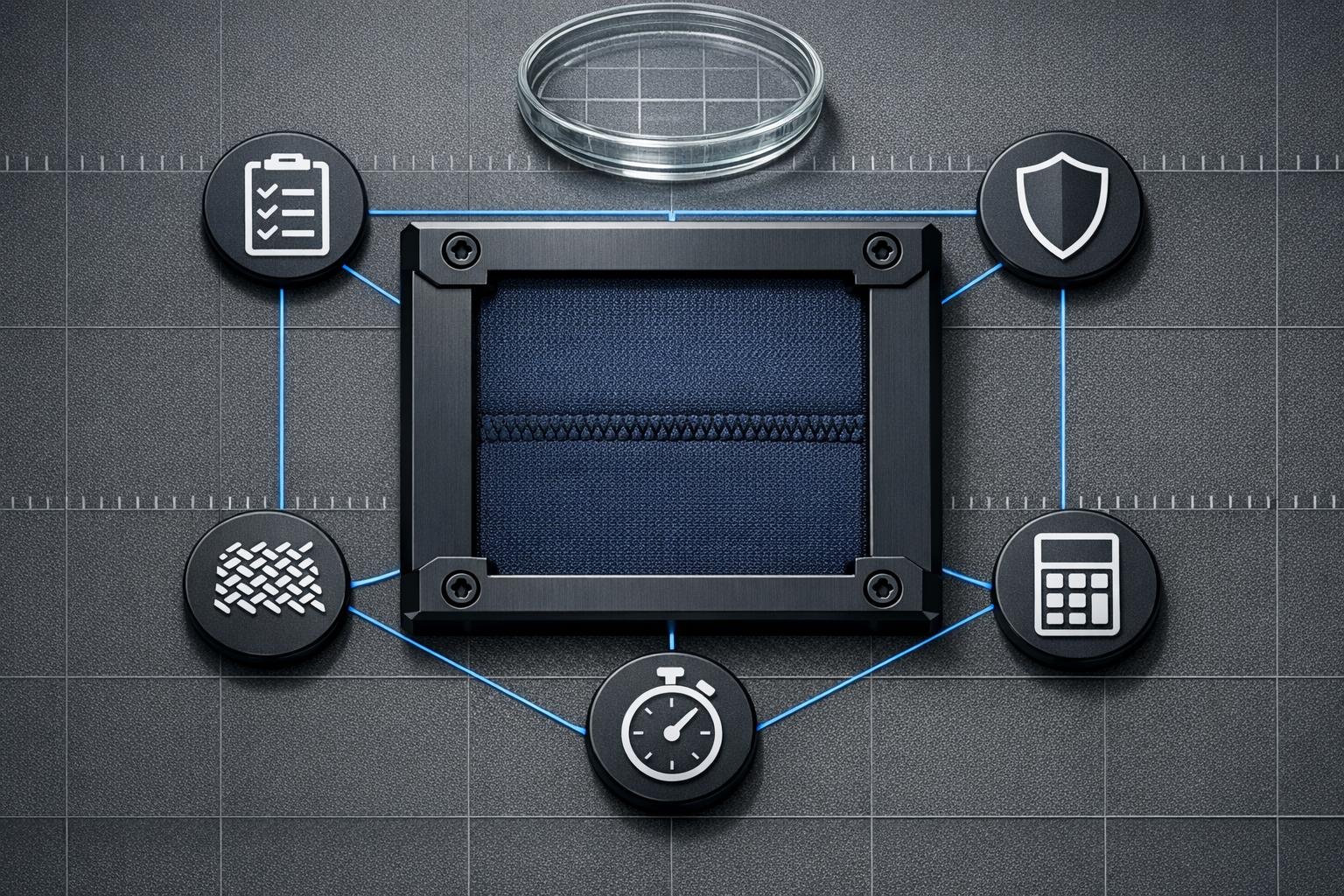
When selecting an antimicrobial testing lab for activewear, focus on these key points:
- Standards & Methods: Labs should use recognized methods like AATCC 100, ISO 20743, and ASTM E2149, which measure bacterial reduction and test fabric performance.
- Certifications: Look for ISO 17025 accreditation and participation in programs like AATCC Proficiency Testing or IAC-APP, ensuring reliable and accurate results.
- Expertise: Choose labs experienced with performance fabrics, especially hydrophobic or treated textiles, as these materials require specialized testing.
- Cost Factors: Testing costs depend on methods, replication requirements, and additional durability tests, such as laundering cycles.
- Turnaround Time & Communication: Opt for labs with clear reporting, responsive customer service, and the ability to meet your production schedule.
The right lab ensures your products meet industry standards, regulatory requirements, and consumer expectations for odor control and bacterial reduction.
AATCC 100: Antibacterial Testing of Fabrics
sbb-itb-8dbc09a
What to Look for in an Antimicrobial Testing Lab
When choosing an antimicrobial testing lab, it’s important to go beyond the basics. Look for a lab with proven expertise in performance fabrics, adherence to established standards, and verified certifications. These factors directly impact whether your antimicrobial claims will hold up and if your activewear delivers the odor control consumers expect. Let’s dive into the key testing standards and qualifications you should prioritize.
Testing Standards You Need to Know
A reliable lab should use quantitative methods to measure bacterial reduction accurately. One of the key standards for textiles is AATCC TM100, which evaluates antibacterial effectiveness over 18–24 hours on porous materials. For international markets, ISO 20743 is essential. It offers three testing approaches – Absorption (similar to AATCC 100), Printing (using membrane-filtered bacteria), and Transfer (inoculating agar plates) – and requires triplicate testing for precision.
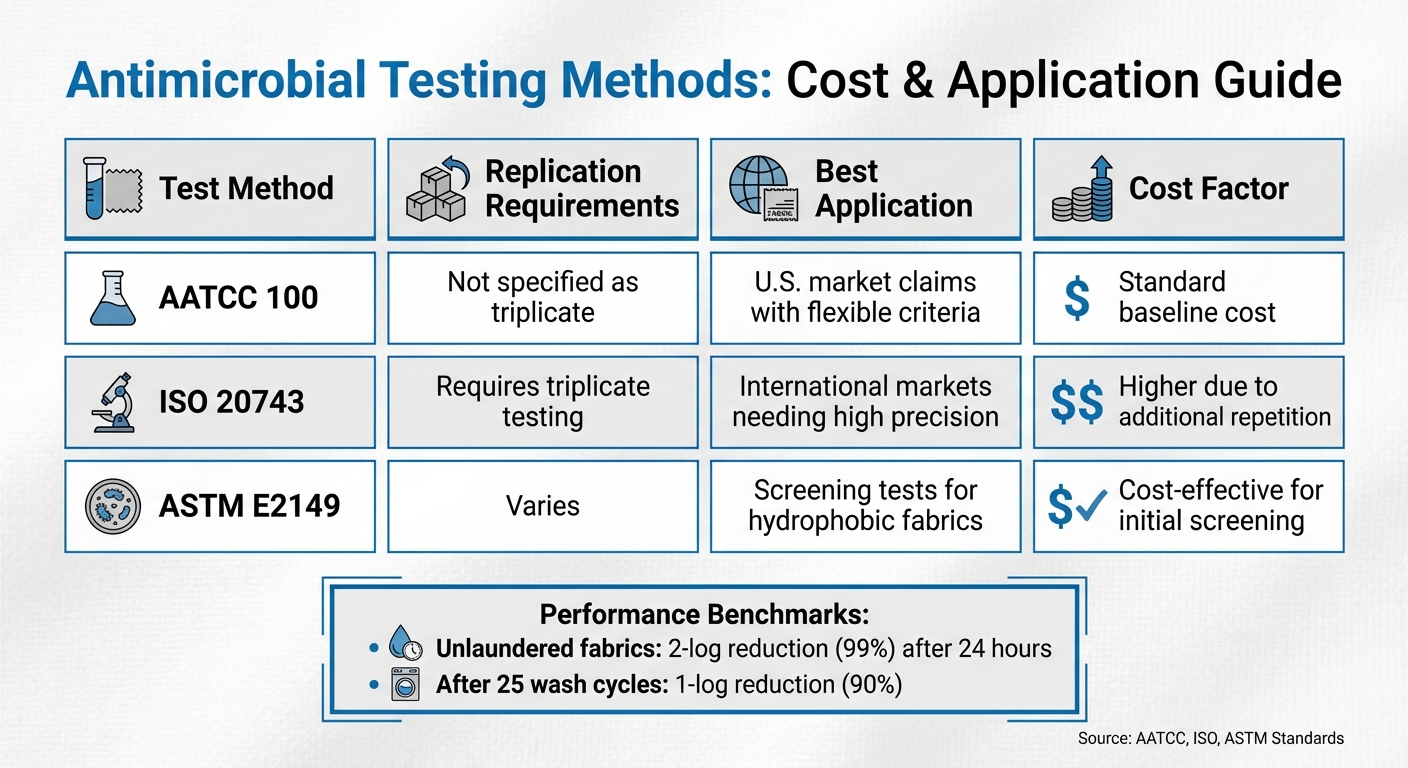
If your activewear includes water-repellent or hydrophobic fabrics, ask about ASTM E2149. This dynamic shake flask test ensures treated fibers come into contact with bacteria by using constant agitation, solving the limitations of static tests for water-resistant materials. For unlaundered fabrics, a 2-log reduction (99%) in bacteria after 24 hours is typical. After 25 wash cycles, this benchmark usually drops to a 1-log reduction (90%).
"The water in the test system dramatically enhances the reaction between embedded antimicrobial agents and microorganisms. In actual use, most antimicrobial surfaces are not covered with water for more than a few minutes." – Microchem Laboratory
Another standard, ASTM E2922, helps labs determine the right test method based on whether an antimicrobial treatment is diffusible or substrate-bound. To avoid false-positive results, labs should also adhere to ASTM E1054 to verify neutralization.
Lab Certifications and Accreditations
Certifications help distinguish dependable labs from those simply running tests. Look for labs certified through the International Antimicrobial Council‘s Antimicrobial Proficiency Program (IAC-APP). This certification ensures the lab follows standardized protocols across AATCC, ASTM, ISO, and JIS standards, and participates in semi-annual measurement reviews [10, 14].
"Reported antimicrobial efficacy without laboratory proficiency is meaningless." – International Antimicrobial Council
Check for the IAC-APP logo on the lab’s website and verify the IAC Verification Number on test reports to confirm compliance with reproducible, verified protocols. Labs participating in AATCC Proficiency Testing Programs (PTP) also compare their results with hundreds of other facilities, fostering continuous improvement and reliability.
If your brand makes health or odor-control claims in the U.S., ensure the lab’s methods align with EPA requirements. Most antimicrobial textiles fall under the EPA’s "Treated Article Exemption", which limits claims to fabric protection and odor control rather than public health benefits.
Beyond certifications, a lab’s hands-on experience with technical fabrics is equally important.
Experience with Performance Fabrics
Testing performance fabrics requires specialized expertise. Features like moisture-wicking blends, hydrophobic treatments, and complex knit structures can impact test results. Labs with experience in these materials know when to adjust standard protocols to better reflect real-world conditions.
Reputable labs often perform tens of thousands of tests annually, showcasing their familiarity with diverse fabric types. If your activewear includes hydrophobic materials, confirm how the lab handles these challenges. Standard absorption tests like AATCC TM100 or ISO 20743 can be tricky for fabrics that resist liquid absorption [12, 8].
Additionally, labs should consider other fabric treatments – like flame retardants, softeners, or whiteners – that might interfere with antimicrobial agents. Ask for documentation explaining any adjustments to standard methods. Reliable labs will outline why modifications were made and how they simulate actual garment use. Since activewear claims often emphasize odor control rather than just bacterial reduction, the lab should also excel in testing methods that measure growth inhibition.
Understanding Testing Costs
Antimicrobial Testing Methods Comparison for Performance Fabrics
Now that you’re familiar with lab standards and qualifications, let’s take a closer look at the factors that influence antimicrobial testing costs. These costs can vary widely depending on the test methods, turnaround times, and other specific requirements. Knowing what drives these expenses can help you plan your budget effectively and avoid unexpected charges.
What Affects Testing Prices
The test method you select plays a major role in determining costs. For instance, protocols that require triplicate testing demand more materials and labor compared to single-run tests. Similarly, testing against a single microorganism is generally less expensive than testing against multiple or more resistant organisms like MRSA.
Laundering and durability testing are additional cost drivers. Many brands test antimicrobial performance after 5, 25, or even 50 standardized wash cycles to assess long-term effectiveness. Each cycle adds to the expense due to the need for specific detergents and equipment that meet AATCC/ASTM standards.
Regulatory compliance can also increase costs, especially if testing involves specialized fabrics like hydrophobic or flame-resistant materials. Some activewear brands use the Treated Article Exemption for odor control claims, which allows them to bypass submitting efficacy data to the EPA, saving on regulatory expenses. However, custom tests that simulate real-world microbial challenges or "worst-case" scenarios can significantly increase complexity and costs.
With these factors in mind, understanding how to evaluate lab pricing becomes essential.
How to Compare Lab Pricing
When comparing lab costs, it’s important to request quotes for specific standardized methods like AATCC 100 or ISO 20743. This ensures you’re comparing equivalent services. Make sure to ask if the quoted price includes critical elements such as neutralization and elution controls, which are essential for valid results.
If you require durability testing, confirm whether laundering is included in the price. Labs with in-house laundering capabilities can save you time and reduce shipping costs. Additionally, if your fabric is hydrophobic, let the lab know upfront, as these materials can be more challenging – and potentially more expensive – to test.
It’s also a good idea to verify the lab’s credentials. Participation in AATCC Proficiency Testing Programs can demonstrate consistent performance, while ISO 17025 accreditation assures technical competence and quality. Some labs even offer same-day quotes, which can help streamline your planning process.
Here’s a quick comparison of common testing methods and their cost factors:
| Test Method | Replication Requirement | Best For | Cost Factor |
|---|---|---|---|
| AATCC 100 | Not specified as triplicate | U.S. market claims with flexible criteria | Standard baseline cost |
| ISO 20743 | Requires triplicate testing | International markets needing high precision | Higher due to additional repetition |
| ASTM E2149 | Varies | Screening tests for hydrophobic fabrics | Cost-effective for initial screening |
Defining your performance targets early can save time and money. For example, AATCC 100 doesn’t specify success benchmarks, so setting clear criteria with your lab can help avoid unnecessary re-tests. As the method itself notes:
"The criteria for success must be decided by the interested parties".
Checking Lab Reliability and Speed
Once you’ve narrowed down cost-effective lab options, the next step is to ensure their reliability and speed align with your production needs. Delays or unreliable results can lead to costly setbacks, so it’s crucial to verify the lab’s quality assurance practices and ability to deliver accurate results on time.
How to Verify Lab Quality
Start by confirming whether the lab participates in proficiency testing programs like the IAC Antimicrobial Proficiency Program (IAC-APP). These programs conduct semi-annual reviews and cross-laboratory studies to evaluate testing consistency. Additionally, certifications from organizations such as the International Antimicrobial Council indicate that the lab has been evaluated for its equipment, technical skills, and personnel expertise.
Request sample reports from the lab. These reports should include a unique verification number and explain any modifications made to standard methods like AATCC 100 or ISO 20743. According to the International Antimicrobial Council:
"Method modifications are a standard course within microbiological testing but the reasoning behind the modifications should always be explained and understood".
Also, inquire about the lab’s personnel qualifications. Are they trained in microbiological testing? Do they have expertise in textile antimicrobial agents?. Equipment calibration is another critical factor. Ask about their maintenance schedule – routine checks and preventive care are essential. As noted by the International Antimicrobial Council:
"For a lab to produce reliable and reproducible data, every piece of equipment must function precisely as intended".
Finally, beyond technical accuracy, assess the lab’s ability to communicate clearly and deliver results promptly to meet your production timelines.
Delivery Times and Communication
Turnaround times can vary depending on whether you’re requesting standard tests or custom procedures. Carrie Gray from AATCC highlights this complexity:
"Selecting a textile testing lab can be a daunting task. The decision must make good business sense with cost, logistics, turnaround time, and more".
ISO 17025-accredited labs often have streamlined processes designed to provide fast and reliable results. To avoid delays, confirm that the lab’s equipment inventory matches the requirements of your specific test methods.
Strong communication is just as important as speed. Top-tier labs provide direct access to scientists who can recommend the best testing methods for your fabric and antimicrobial technology. When reaching out to a lab, pay attention to their response time and whether they use standardized forms to collect details about your fabric’s composition, construction, and consumer claims. Providing complete information upfront can help minimize back-and-forth delays.
If your activewear involves technical fabrics with additional features like water repellents or flame retardants, confirm that the lab has experience with these materials. Such fabrics may require specialized procedures that could impact testing timelines.
Brands like New Dong Huang Garment Co., Ltd. (https://test1.techsolutionn.com) value labs that combine technical expertise with clear communication. This ensures timely, reliable test results that support the successful launch of performance-oriented activewear.
Steps to Select the Right Testing Lab
Building on the standards and cost considerations discussed earlier, here are practical steps to guide you in choosing the right testing lab.
Check Lab Experience and Capabilities
Start by assessing the lab’s experience with your specific product type. A lab specializing in textiles may not be the best fit if your focus is on coatings or plastics. Confirm that the lab can differentiate between diffusible and non-diffusible antimicrobial agents, as these require distinct testing methods. According to ASTM E2922-23:
"The test methods indicated in this guide should be performed only by those trained in microbiological techniques, are familiar with textile antimicrobial agents and with the end use exposures of the antimicrobial treated textile material."
Check if the lab can handle the standard methods your brand relies on, such as AATCC 100, ISO 20743, ASTM E2149, or JIS L 1902. Additionally, ask if they provide custom testing to simulate practical conditions. For example, some labs test antimicrobial efficacy on dry microbial films instead of submerged samples – an approach that mirrors how activewear functions during real-world use.
If your product will be sold in the U.S., ensure the lab is familiar with EPA regulations, including the Treated Article Exemption outlined in Pesticide Registration Notice 2000-1. Labs like Microban, which conducts over 30,000 antimicrobial tests annually, and Microchem Laboratory, with more than 10,000 antimicrobial efficacy tests under its belt, are examples of experienced facilities .
Verify Credentials and Ask for References
Request the lab’s full ISO 17025 accreditation scope and confirm their participation in proficiency testing programs, such as those offered by AATCC or IAC-APP, to ensure they meet quality benchmarks for antimicrobial testing. Carrie Gray from AATCC emphasizes the importance of this:
"Labs with ISO 17025 accreditation will generally have world class processes in place to help ensure precision and accuracy."
Proficiency programs require labs to undergo regular evaluations and compare their results anonymously with other facilities. As noted by the IAC:
"Reported antimicrobial efficacy without laboratory proficiency is meaningless."
When reviewing sample reports, look for unique verification numbers that confirm adherence to certified testing procedures. Also, ask the lab to clarify any adjustments made to standard methods. Don’t forget to inquire about their equipment calibration schedule – it’s essential for accurate antimicrobial testing.
Once you’ve confirmed the lab’s credentials and reliability, it’s time to gather quotes and compare their services.
Get Quotes and Compare Services
Reach out to at least three labs for detailed quotes to compare costs and offerings. Some labs, like Microchem, provide same-day price quotes for standard methods such as ASTM E2149 or ISO 22196. Ensure the quotes include technical support, as top labs often guide you in selecting the best methods for your product and antimicrobial technology.
Ask labs to justify their recommended testing methods and explain any deviations. For example, why might AATCC 100 be a better fit for your material than ISO 20743?
Focus on labs that offer testing tailored to real-world conditions, such as "worst-case" microbial challenges or durability evaluations through simulated home laundering. While standard methods provide foundational data, custom protocols can better predict how your activewear will perform after regular use and washing. For brands like New Dong Huang Garment Co., Ltd. (https://test1.techsolutionn.com), working with a lab that offers technical expertise, regulatory insight, and clear communication ensures that antimicrobial claims remain accurate and compliant with U.S. market standards.
Conclusion
When choosing a testing lab, focus on certifications, technical expertise, reliability, and cost alignment. Labs with ISO 17025 accreditation adhere to strict quality standards, while participation in proficiency programs like those from AATCC or the International Antimicrobial Council ensures dependable and consistent results. These elements not only validate your product claims but also provide a solid foundation for informed decision-making.
It’s also important to select labs that specialize in performance fabrics and can guide you toward the appropriate testing methods for your antimicrobial technology. For instance, AATCC 100 is suitable for general textiles, while ASTM E2149 works better for hydrophobic materials. This level of expertise strengthens your antimicrobial claims and highlights your commitment to producing high-quality products. For activewear brands such as New Dong Huang Garment Co., Ltd. (https://test1.techsolutionn.com), collaborating with a lab that combines regulatory knowledge, technical expertise, and clear communication ensures antimicrobial claims remain accurate and compliant with U.S. market requirements.
Operational efficiency also matters. Look for labs that offer transparent reporting and responsive customer service. Labs that provide detailed explanations of any method adjustments and maintain routine equipment calibration deliver data you can confidently use for both marketing and compliance. With the antimicrobial textile market expected to grow to $29.27 billion by 2032, partnering with a lab that meets your quality standards is an investment in your brand’s reputation and credibility.
FAQs
Which test should I use for my fabric?
The AATCC 100 antimicrobial fabric test is a trusted method for assessing antibacterial treatments on textiles. It evaluates how well a fabric can reduce or eliminate bacteria within a 24-hour timeframe. This test is commonly used to verify the effectiveness of antimicrobial finishes applied to fabrics.
What results are “good enough” for odor claims?
When it comes to claims about odor reduction, they often rely on standardized testing methods such as ISO 17299-2 and ISO 17299-3. These methods use tools like gas chromatography and other validated procedures to measure how effectively a textile reduces odors. This ensures the material meets specific performance benchmarks for deodorizing. It’s important to verify that the testing method follows recognized standards to ensure the claims are reliable.
What should be included in a lab quote?
When requesting a lab quote for antimicrobial testing, make sure to include key details to get accurate pricing and ensure the lab can meet your needs. Start by specifying the type of testing you require – whether it’s for bacteria, viruses, or odor control. Provide clear information about the material being tested, such as the type of fabric or surface. If your product needs to meet certain regulatory standards – like EPA or ISO guidelines – be sure to mention those as well.
Additionally, outline the sample size, quantity, and your desired timeline. This helps the lab understand the scope of the project and ensures their quote reflects your specific requirements.