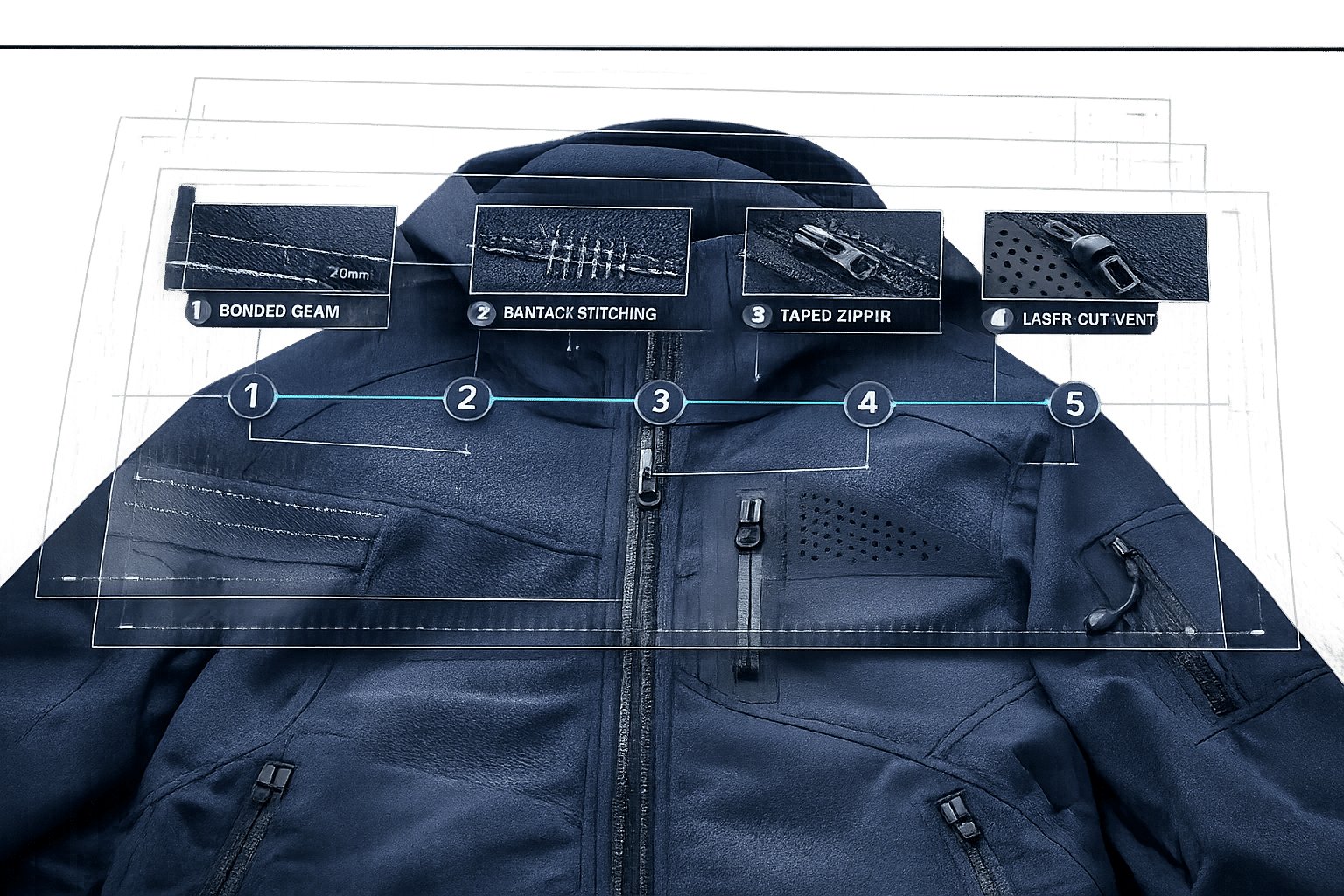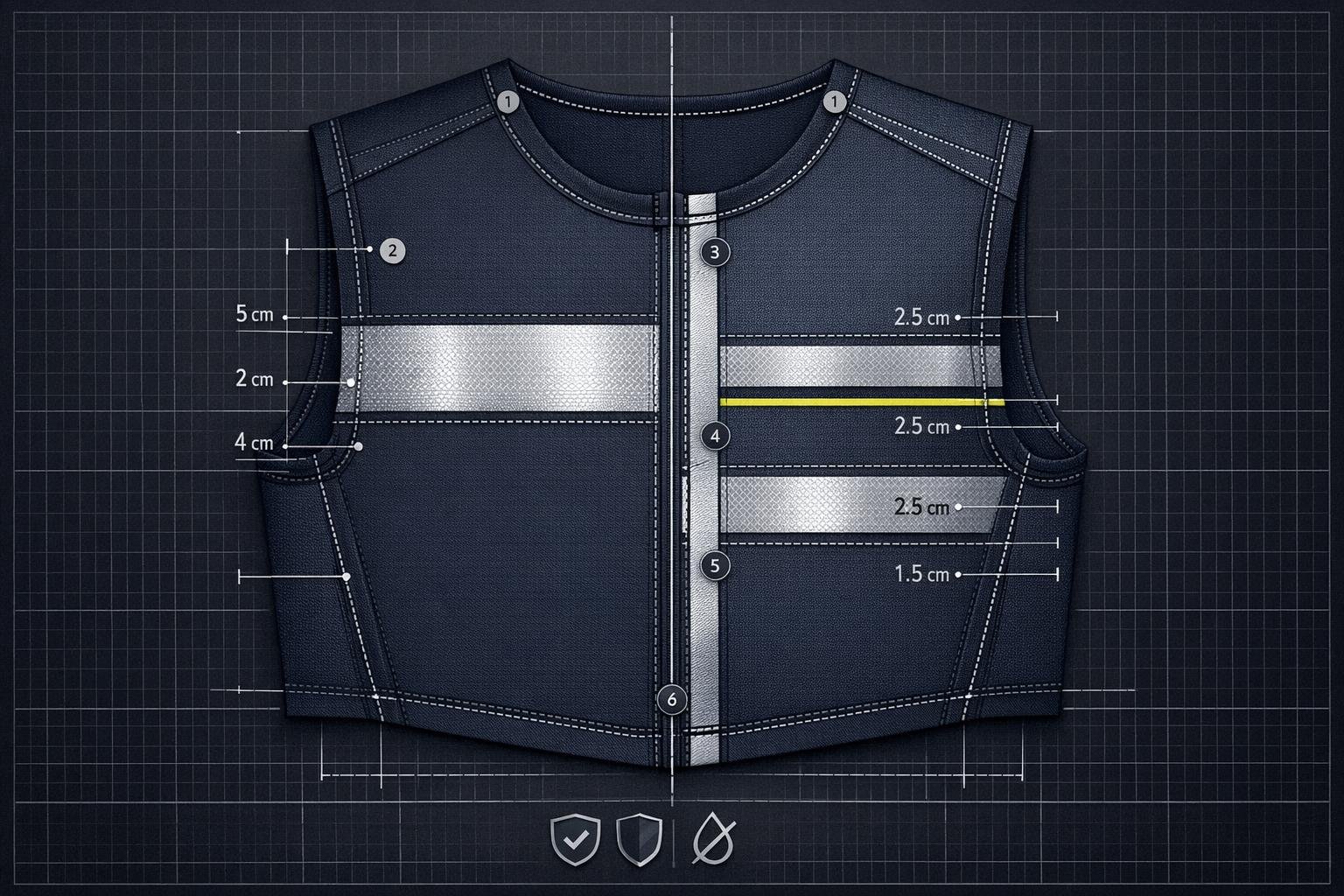
Reflective activewear ensures visibility in low-light conditions, reducing accidents for workers and pedestrians. Safety standards like EN ISO 20471 (global) and ANSI/ISEA 107 (U.S.) set specific requirements for material use, design, and durability. Key takeaways:
- EN ISO 20471: Focuses on high-risk environments, requiring strict 360° visibility with continuous reflective bands. Class 3 garments must meet high material thresholds for fluorescent and retroreflective elements.
- ANSI/ISEA 107: Offers tailored guidelines for U.S. workplaces, dividing garments into Type O (off-road), Type R (roadways), and Type P (public safety). It emphasizes biomotion for enhanced visibility.
- Chemical Safety: Standards like OEKO-TEX and Proposition 65 ensure materials are free from harmful substances, with new PFAS regulations taking effect in 2026.
Manufacturers must align with regional standards to avoid compliance issues. Both systems prioritize visibility and safety, but their requirements vary significantly.
What You Need to Know About ANSI Hi-Visibility Safety Vests for Towing
sbb-itb-8dbc09a
1. EN ISO 20471
EN ISO 20471 sets the global standard for high-visibility clothing designed for use in high-risk environments where maximum visibility is crucial. Typical scenarios include roadwork, airport operations, and emergency response teams. The standard ensures garments meet strict performance and durability guidelines.
"High visibility clothing is intended to provide conspicuity of the wearer in any light condition when viewed by operators of vehicles or other mechanized equipment during daylight conditions and under the illumination of headlights in the dark." – ISO 20471:2013
The standard classifies garments into three categories based on the minimum required areas of visible material. For Class 3 garments, at least 0.80 m² (8.6 ft²) of fluorescent material and 0.20 m² (2.2 ft²) of reflective material are required. Class 2 garments require 0.50 m² (5.4 ft²) of fluorescent material and 0.13 m² (1.4 ft²) of reflective material. Reflective bands must be a minimum of 50 mm (2 inches) wide, and any gaps for seams or fasteners cannot exceed 50 mm individually or 100 mm in total around the torso.
Material Requirements
Both fluorescent and reflective materials must retain their effectiveness even after the maximum number of washing cycles specified by the manufacturer – or at least five cycles if no maximum is stated. Testing includes evaluations of color measurement, luminance, tensile and burst strength, tear resistance, and color fastness to perspiration, which must achieve a minimum grade of 4 for staining.
Visibility Requirements
The standard mandates full 360° visibility, requiring reflective bands around the torso, sleeves, and legs. For garments with long sleeves, if a sleeve obstructs a torso band, the sleeve must also include reflective bands. In high-risk settings, Class 3 garments must cover the torso and include reflective elements on sleeves and/or trouser legs to meet visibility requirements.
Application Scope
EN ISO 20471 is specifically designed for high-risk environments and does not apply to medium- or low-risk situations. A Class 3 rating can also be achieved by combining pieces, such as a Class 2 jacket paired with Class 2 trousers, to meet certification criteria. However, harnesses are explicitly excluded from certification under this standard. Looking ahead, a new edition (ISO/DIS 20471) is currently in the enquiry phase and is expected to take effect in February 2026.
2. ANSI/ISEA 107
ANSI/ISEA 107-2020 addresses the unique safety needs of U.S. work environments, offering guidelines tailored to specific workplace hazards. It divides high-visibility garments into three categories: Type O for off-road environments like warehouses, mining, and oil extraction; Type R for roadway work such as construction and utilities; and Type P for public safety roles like emergency responders. According to the 2009 Manual on Uniform Traffic Control Devices (MUTCD), workers on public roadways must wear at least Class 2 or Class 3 high-visibility apparel to ensure safety.
Material Requirements
The standard specifies three fluorescent colors – yellow-green, orange-red, and red – for background materials. These materials, along with retroreflective components, undergo rigorous testing for factors like chromaticity, luminance, tensile strength, tear resistance, and dimensional stability. They are also evaluated for durability through cleaning and exposure tests, ensuring they hold up in demanding conditions. For example, the 2020 edition includes laundering tests that meet ISO 6330 Method 6N standards at 60°C (140°F), verifying that reflective properties withstand repeated heavy-duty cleaning cycles.
Visibility Requirements
Biomotion plays a key role in enhancing visibility. Reflective material is strategically placed on sleeves and pant legs to make movement more noticeable. Horizontal gaps in reflective material must not exceed 2 inches. For garments without full sleeve encirclement, at least 23.25 in² of reflective material must be placed on the shoulder to provide 180° visibility. The minimum width of reflective materials varies depending on the performance class: 1 inch for Type O Class 1, 1.38 inches for Type R Class 2, and 2 inches for Type R Class 3.
Here’s a breakdown of the minimum material requirements for each garment type under ANSI/ISEA 107-2020:
| Garment Type | Performance Class | Background Material (min.) | Reflective Material (min.) | Reflective Width (min.) |
|---|---|---|---|---|
| Type O (Off-road) | Class 1 | 217 in² | 155 in² | 1" |
| Type R (Roadway) | Class 2 | 775 in² | 201 in² | 1.38" |
| Type R (Roadway) | Class 3 | 1,240 in² | 310 in² | 2" |
| Type P (Public Safety) | Class 2 | 450 in² | 201 in² | 2" |
| Type P (Public Safety) | Class 3 | 775 in² | 310 in² | 2" |
Application Scope
The standard also accounts for smaller garment sizes, allowing for a reduction in background fabric area to ensure a proper fit without compromising compliance. Labels on these garments must include the ANSI/ISEA 107-2020 designation, the specific Type and Class, and the maximum number of wash cycles (e.g., "Max 50") to maintain safety standards over the garment’s lifespan. If the garment isn’t flame resistant, the label must clearly state: "This garment is not flame resistant as defined by ANSI/ISEA 107-2020". This U.S.-specific standard sets a benchmark, which will be compared to other global standards in the next section.
3. Other Regional Standards (OEKO-TEX, Proposition 65)

When it comes to reflective activewear, visibility is just one piece of the puzzle. Ensuring chemical safety in materials is equally important. While EN ISO 20471 and ANSI/ISEA 107 focus on visibility standards, other regulations like OEKO-TEX Standard 100 and California Proposition 65 address material safety concerns.
Safe Reflection Inc. emphasizes this, stating, "Certifications such as Oeko-Tex and Bluesign ensure that reflective materials used in textiles adhere to the most stringent of the various world legislations on hazardous chemicals".
Material Requirements
The OEKO-TEX Standard 100 evaluates materials for harmful substances in three main categories: illegal substances, regulated chemicals, and substances known to be harmful but not yet regulated. This standard applies to every part of a garment, ensuring comprehensive compliance. Products are classified into four categories based on skin contact, with stricter criteria for items that are worn directly against the skin.
In the U.S., stricter regulations are on the horizon. Starting January 1, 2026, states like Maine, Vermont, Connecticut, Minnesota, and New Mexico will enforce stringent PFAS regulations for textiles. By 2032, Minnesota and New Mexico aim to implement a complete ban on non-exempt PFAS in these products.
Application Scope
Chemical safety standards like OEKO-TEX and Proposition 65 complement visibility-focused regulations such as ISO 20471 and ANSI/ISEA 107. While the latter ensure garments meet visibility metrics like fluorescence and retro-reflectivity, the former focus on eliminating hazardous chemicals from materials. Reflective activewear must not only meet visibility requirements but also ensure that every component is free from harmful substances. Additionally, the EPA requires manufacturers and importers to report PFAS usage, hazards, and exposure under TSCA Section 8(a).
Advantages and Disadvantages
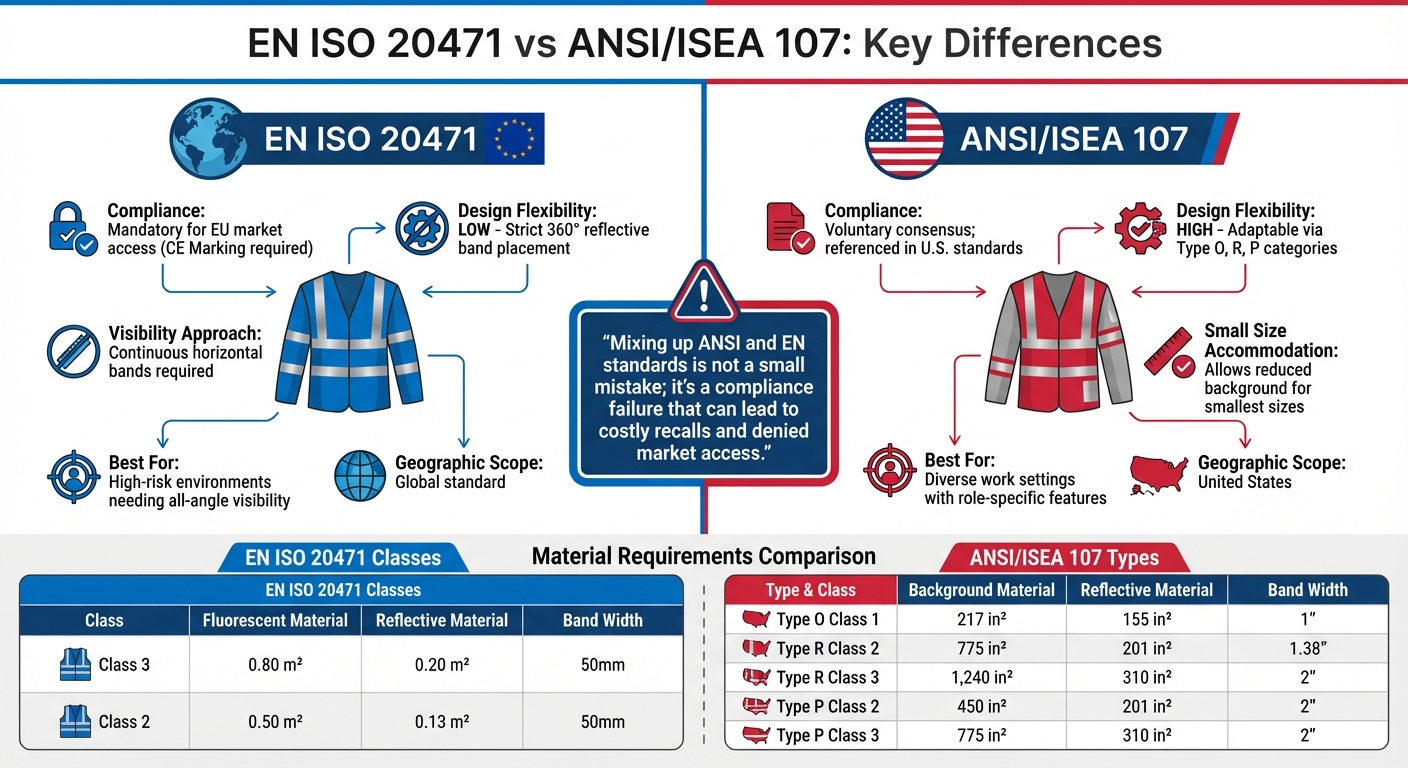
EN ISO 20471 vs ANSI/ISEA 107 Safety Standards Comparison
Every safety standard comes with its own set of benefits and challenges. EN ISO 20471, for instance, requires continuous horizontal reflective bands around the torso, sleeves, and legs to guarantee 360° visibility in high-risk environments. While this ensures exceptional visibility, the strict requirements can restrict design options, especially when it comes to accommodating equipment access, and may increase production complexity.
On the other hand, ANSI/ISEA 107 offers more flexibility through its Type O, R, and P categories. For example, Type P supports features like 5-point breakaway designs and shorter front lengths, which are ideal for workers using belt-mounted equipment. However, as a voluntary standard, it can sometimes cause confusion when not formally incorporated into regulatory frameworks.
"Mixing up ANSI and EN standards is not a small mistake; it’s a compliance failure that can lead to costly recalls and denied market access."
- Ivy Xu, Author and Driving Force, Vissafety
| Feature | EN ISO 20471 | ANSI/ISEA 107 |
|---|---|---|
| Compliance | Mandatory for EU market access (CE Marking) | Voluntary consensus; referenced in U.S. standards |
| Design Flexibility | Low – strict 360° reflective band placement | High – adaptable via Type O, R, P categories |
| Visibility Approach | Continuous horizontal bands | Flexible placement for job-specific needs |
| Small Size Accommodation | No specific area reduction | Allows reduced background for smallest sizes |
| Best For | High-risk environments needing all-angle visibility | Diverse work settings with role-specific features |
In addition to visibility, manufacturers must also consider chemical safety to protect wearers. Standards like OEKO-TEX and Proposition 65 ensure garments are free from harmful substances, but they come with added costs for compliance testing and certification. While these measures enhance safety, they can delay product launches and increase production expenses. Together, these chemical and visibility standards create a comprehensive framework to ensure reflective activewear meets stringent global safety requirements.
Conclusion
When selecting safety standards, consider the target market and the specific work environment. For the European Union, EN ISO 20471 is a mandatory standard, requiring CE marking for product entry – failure to comply could result in denied shipments. This standard is particularly suited for high-risk environments such as construction sites and roadwork. On the other hand, ANSI/ISEA 107 provides more design flexibility with its Type O, R, and P categories, making it ideal for the varied work settings in the United States, from warehouses to emergency response situations.
For manufacturers aiming to serve multiple markets, understanding regional standards is critical to avoid rejected shipments. Aligning garment features with job-specific needs is equally important. For example, U.S. roadway workers must wear Type R garments to comply with the Manual on Uniform Traffic Control Devices (MUTCD). Emergency responders benefit from Type P garments, which include breakaway features and shorter fronts for easier access to belts. For medium-risk activities, such as outdoor sports, EN 17353 offers enhanced visibility without the stringent requirements of heavy-duty construction standards.
Whether it’s EN ISO 20471 or ANSI/ISEA 107, these standards ensure that reflective activewear meets international safety expectations. Always verify compliance with the latest editions – ANSI/ISEA 107-2020 or EN ISO 20471:2013/A1:2016 – and ensure care labels accurately reflect the minimum cleaning performance for each garment component. For manufacturers like New Dong Huang Garment Co., Ltd., staying updated on these standards is essential to maintaining global market access while balancing safety and innovative design.
FAQs
Which standard do I need for the U.S. vs. the EU?
For the U.S., the standard to follow is ANSI/ISEA 107, which ensures that high-visibility safety apparel aligns with workplace regulations. In the EU, the applicable standard is EN ISO 20471, designed to address high-visibility clothing requirements under different lighting conditions.
If you’re producing reflective activewear, make sure it adheres to ANSI/ISEA 107 for the U.S. market and EN ISO 20471 for the EU.
How do I choose the right ANSI Type and Class for my job?
To determine the right ANSI Type and Class, think about where you’ll be working and how much visibility is required. The ANSI/ISEA 107-2020 standard outlines three Types:
- Type O (Off-road): Designed for environments away from public roadways.
- Type R (Roadway): Meant for workers exposed to traffic or moving vehicles.
- Type P (Public safety): Tailored for emergency and law enforcement personnel.
Each Type is divided into Classes 1, 2, or 3. Higher classes provide increased visibility, making them suitable for more hazardous conditions. For detailed guidelines and to ensure compliance with safety standards, consult the ANSI/ISEA 107-2020 documentation.
What do PFAS rules mean for reflective activewear after 2026?
Starting in 2026, new rules will impose tighter restrictions and outright bans on PFAS-based treatments and coatings used in reflective activewear. These updates are part of broader efforts to align with updated chemical safety standards, which could restrict the use of specific materials in production. Companies will need to adjust their manufacturing processes to ensure their products meet these new requirements.